July 6, 2021

Facilitating global access to Cambodia’s fruits and vegetables

A business implements a holistic approach, applying interventions at various levels to improve the horticulture supply chain

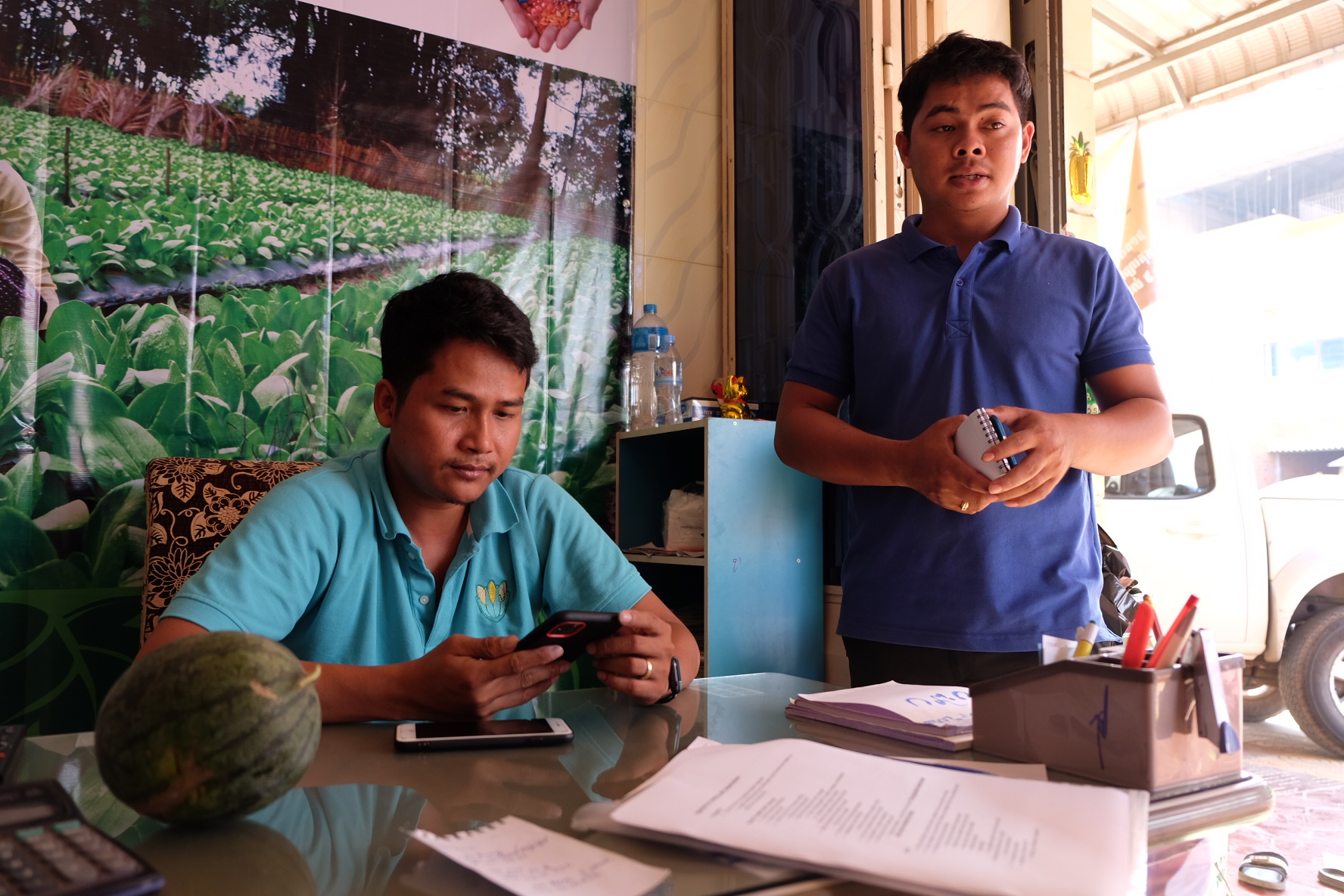
Observing supply chain challenges occurring throughout Cambodia’s horticulture sector, the newly established, joint-venture company AgriOn Cambodia (AgriOn) devised a multifaceted action plan that envisions a dependable, sustainable supply of locally grown, safe fruits and vegetables to domestic and international markets. Investing to improve storage and logistics, working with producers to adopt improved production practices and establish traceability systems, and developing formal contract agreements with producers, AgriOn aims to implement a new business model to promote Cambodia’s horticulture sector on a global scale.

Feed the Future Cambodia Harvest II “Harvest II” awarded an Investment Accelerator grant to AgriOn to support the expansion of their operations through an investment in logistics and cold-storage equipment. The investment includes cold rooms, refrigerated trucks, conveyers, cleaning machines, water filtration systems, packaging machines, and other equipment. This equipment improves the collection and transport of fruit and vegetables. Refrigerated trucks transport fresh, quality produce to a cold storage facility to wash, clean and package it in accordance with food safety standards, followed by refrigerated transport to local and international markets. Since receiving the pay-for-performance based Harvest II grant, AgriOn invested $221,469 and hired 23 new employees including eight females.

Harvest II awarded a grant to AgriOn to establish a sustainable supply chain to domestic and international markets.

The investment improves storage and logistics and promotes compliance with food safety standards, increasing local and international competitiveness and access to Cambodia’s products. AgriOn’s Director Mr. Marith Chhor recently stated, “with the grant from USAID, it not only helps us in funding, but it may help us access more high-value markets like the US and EU, and give more chances to Cambodian growers.”

AgriOn’s multi-pronged action plan includes forging a dependable and high-quality supply chain by working closely with local agricultural cooperatives (ACs) and farmers to supply quality inputs, provide training, and connect them to reliable suppliers of greenhouse technology. In collaboration with PDAFF, AgriOn works with their producers to implement good agricultural practice (Cam-GAP) standards to improve quality and yields. In March, AgriOn provided technical training to 187 producers from 18 ACs in Battambang province, sharing various practices including crop cultivation, land treatment, and soil testing.

AgriOn signs contract farming agreements with representative from ACs to supply various fruits and vegetables.

Encouraging development across Cambodia’s horticulture sector, AgriOn establishes contract farming with farmers and farmer groups.  The company signed contract farming agreements with a total of 418 farmers from 33 ACs across 11 provinces. Mr. Nop Nun from Tasei AC and Mr. Long Mom from Meanchey AC, representatives from two producer groups that have contract agreements with AgriOn, shared that they are very happy working with AgriOn and receiving the support they provide, including technical support, record keeping, and market access.

In collaboration with various partners including Harvest II, AgriOn continues actively working to improve Cambodia’s horticulture sector through the implementation of a holistic, multi-pronged approach.  AgriOn is establishing a sustainable supply of local and safe fruits and vegetables to both domestic and international markets through investment, training, and contract farming.


Exposure visit encourages market & product diversification

New connections unlock a multitude of exciting opportunities in the longan subsector. 

Uncertainty regarding standards, quality and packaging creates challenges in the fresh and processed longan sector. To address these issues and expand distribution, longan actors require a better understanding of market expectations in terms of quality, quantity, and production requirements.

Observing these challenges, Feed the Future Cambodia Harvest II “Harvest II” organized two events for longan actors to learn, observe, and develop connections in potential markets. Harvest II assembled 16 longan actors including processors, exporters, suppliers, a logistics company, and agricultural cooperatives (AC) from Battambang province to discuss collaboration opportunities. Harvest II recruited a consultant to assist these actors to increase competitiveness and unlock access to export markets by identifying and exploring target markets. The meeting established new connections and resulted in the members forming a Telegram group to share market and technical information, raw material supply, and logistics arrangements. 

Longan actors visit KCCV Plantation’s market to gain a better understanding of product expectations and requirements.

 Following the meeting, Harvest II organized and conducted a two-day exposure visit to Phnom Penh for 12 longan actors from the newly formed group. Sessions with experienced market actors focused on three areas of growth:

1.    Encouraging the adoption of good manufacturing practices (GMP), hazard analysis critical control point (HACCP), and food processing standards, certified fruit processing companies CSL Enterprise and KCCV Company shared their experiences, provided guidance, and advice to participants.

2.    Promoting value-added longan products, Harvest II introduced the participants to food processing experts at the Institute of Technology of Cambodia (ITC) and Phnom Penh Packaging Company (PPPC) to discuss processing, product packaging and branding.

3.    Facilitating market distribution expansion, introductions and meetings were held between longan actors with buyers, wholesalers, and premium markets.

The visit employed active learning and knowledge sharing to advance the longan sector, promoting improved production standards, value-adding, and diversification. Mr. Uy Chhengheng, co-founder of Navita shared what they learned from the visit, “Navita now knows about Lucky market’s requirement on their new products, that helps Navita improve their products by themselves to be able to sell at Lucky in the future.”

A visit to Chip Mong premium market during the exposure visit resulted in a partnership with CSL.  

Harvest II continues to support increased prosperity and sustainability across Cambodia’s horticulture sector. Working with market actors, Harvest II connects and assists in forging critical partnerships and strategies to improve production practices, strengthen the supply chain and diversify distribution networks.


A chain reaction, beginning with the initial meeting and continuing with the exposure visit, produced a multitude of fruitful partnerships for the longan actors. New market diversification partnerships include KCCV selling Agro Nature’s products in their Phnom Penh markets and CSL Enterprise successfully introducing and launching their new products in AEON, Lucky and Chip Mong premium markets. Engaging product diversification, wholesaler Chheng Sreyleap now supplies fresh dragon fruit to fruit processor Navita for processing. Further agreements facilitated by these events include Yim Bunthoeun supplying fresh longan to KCCV and AC Ponleu Pichenda supplying fresh longan to Chheng Sreyleap and KCCV. Additionally, the group formed Telegram groups with PPPC to share packaging advice and with ITC to access technical information for processed products.

Harvest II continues to support increased prosperity and sustainability across Cambodia’s horticulture sector. Working with market actors, Harvest II connects and assists in forging critical partnerships and strategies to improve production practices, strengthen the supply chain and diversify distribution networks. 


Strengthening the Horticulture Sector through Contract Farming

Agricultural Cooperatives in Battambang use contract farming to guarantee consistent and quality supply

Businesses in Cambodia’s horticulture sector are often hampered by the lack of formal agreements to clarify mutual expectations in business dealings. Contract farming is a formal agreement to promote trust and clarify expectations around product quality, quantity, timing, and price. However, many actors fail to form contract farming agreements because they don’t know what’s involved and don’t understand the benefits. 

Feed the Future Cambodia Harvest II “Harvest II” encourages the adoption of contract farming as a tool of mutual benefit for both farmers and buyers. Harvest II facilitated a contract farming signing event between Tasei Agricultural Cooperative (AC) and five ACs, from Battambang and Banteay Meanchey provinces, and the buyer REMIC. The Provincial Department of Agriculture, Forestry and Fisheries (PDAFF) from Battambang served as the witness for the event. In the agreements, Tasei AC agreed to source vegetables from the five ACs based on price, quantity, type of vegetable, and other binding conditions agreed to by both parties. 

Farmers harvest curly cabbages in Tasei Agricultural Cooperative’s net houses in Battambang. 


Before entering into the agreement, Harvest II introduced these ACs to growing safe vegetables under net houses. Observing a strong interest, Harvest II connected them with Tasei AC to provide net house building services and sign agreements to work together. Among these ACs, PichChenda AC originally focused on growing longan but after seeing the benefits, they expanded to also include vegetables. Harvest II supported 30 of the AC’s members’ joining Cam-GAP trainings conducted by PDAFF. 

Prior to the signing of the agreement, Tasei AC sourced around 600 kg of vegetables per day from its members, but after signing the agreement, they can now source an average of two tons per day. Tasei AC supplies these vegetable to REMIC, one of the leading buyers in Phnom Penh, and other buyers across the provinces. Additionally, Harvest II connected Tasei AC with Laey Baitong, a vegetable supplier in Battambang. The two parties have partnered together to capture the growing market demand. 

Harvest II facilitates a contract farming signing event between Tasei AC with five other ACs, and buyer REMIC, witnessed by PDAFF.


Even though many businesses were negatively impacted by the pandemic, Tasei AC has expanded, increasing from 26 to 49 net houses and building an estimated 120 net houses for other cooperatives across the provinces. The expansion created jobs for 26 Cambodian migrant workers returning from Thailand, helping them generate income during the crisis. 

The leader of Tasei AC, Mr. Nob Nun, has worked as a farmer in the past. This experience inspired him to help other farmers implement better farming techniques. He welcomes new ideas and support from various development projects including Harvest II. He shared, “Through Harvest II, we have expanded our services, building more net houses and sourcing more vegetable from other ACs. Through contract farming, farmers are happy to work with us because we help them find markets for their products.” 

Tasei AC is one of many safe vegetable suppliers, working to not only expand their cooperative but also help other ACs grow. Through the establishment of strong connections with multiple actors, Tasei AC brings quality and safe local products to Cambodia’s people, encourages healthy living and promotes the country’s sustainable landscape.

New Financial Product Help Businesses Accelerate Growth

Through Harvest II’s grant, AMK introduces supply chain financing to help address MSME’s financial constraint.

Access to finance is critical for business growth, increasing working capital, improving production, and strengthening the supply chain. Many businesses find themselves unable to expand as they cannot access financing in a timely manner, consequently restricting the effective planning and managing of cash flow.

In January 2020, Feed the Future Cambodia Harvest II “Harvest II” awarded a grant to AMK Microfinance Institution to pilot supply chain financing (SCF) for horticulture MSMEs. SCF is a type of working capital designed to address a company’s short-term financing needs and is a fairly new financial product for AMK.

AMK promoted its SCF model, introducing the customized financing products and services to 26 SMEs (including five women entrepreneurs). As a result, AMK approved the financing of $1.5 million to four market actors including an exporter and input firms in the vegetable and longan subsectors.

Mr. Yim Bunthoeun, a longan exporter in Battambang was one of the actors who qualified for the loan. AMK approved loan  to Bunthoeun to use as working capital to increase his longan purchases. Bunthoeun uses this money to promptly pay farm owners for maintaining the longan farms before flowering and harvesting, and repays AMK after the product is sold. Bunthoeun said, “This loan is important for me as I can expand my purchasing and increase the amount of fresh longan export.”

Yim Bunthoeun collects fresh longan from farmers ready to export to Thailand.

To support Bunthoen on quality production, Harvest II linked the exporter to input firms Khmer Angkor Farmer (KAF) and Drone Khmer Technology (DKT) to receive technical production training and access quality inputs to boost longan yield. In addition, Harvest II supported the General Directorate of Agriculture (GDA) in delivering Cam-GAP training to 422 longan producers.  Forty of these producers applied for Cam-GAP certification, aiming to receive premium pricing for their quality products.

Harvest II assisted Bunthoeun access new markets by connecting him with the safe food mart of KCCV Company in Phnom Penh. The market is currently sourcing 100 kgs of fresh longan per week from Bunthoeun. Harvest II hosted a visit for the exporter to visit and learn about the processing lines of the processing company CSL Enterprise in Phnom Penh, as he would like to set up a longan drying facility to add value to longan. The project also connected him with various processors during business matching events, aiming to increase access to export markets and explore new business opportunities.

Harvest II organizes a business matching event for 16 longan actors to discuss collaboration opportunities.

Bunthoeun said, “I want to expand my export markets not just to Thailand. This is a great opportunity for me to connect with other business partners. Thanks to Harvest II, I have increased not just supply and quality but also access to new potential markets.”

AMK also approved and disbursed supply chain financing to Azaylla in the amount of $20,000. Azyalla used the entire financed amount for expansion of their working capital to a double increase of sales to retail markets such as Chip Mong and Grocerdel in Phnom Penh.

Through Harvest II’s grant program, the project supports various actors including processors, exporters, financial institutions, businesses and farmer associations not just improving production and supply chains, but also accessing new opportunities that help them grow and expand beyond their limits.


January 12, 2021

Safe and organic products foster healthy living

The rising demand for safe and organic horticultural products in Cambodia is creating an array of opportunities for businesses, producers, consumers, and other market actors. Laey Baitong is the first agribusiness enterprise that provides local, fresh, safe, and organic agricultural products in Battambang province. Feed the Future Cambodia Harvest II has been working with this enterprise since January 2020, connecting them with multiple actors including producers, input dealers, and other public and private sector partners, utilizing several avenues to provide consumers with access to safe, local products. 

Harvest II connected Laey Baitong with several input supply firms such as Healing Nature and Husk Ventures to procure organic fertilizer; it also connected them with seed dealer Song Mouy to obtain quality seeds for farmers. In addition to sourcing quality inputs, Harvest II worked with Song Mouy to host an exposure visit to Thailand. This notable occasion provided an opportunity for not just Laey Baitong but also producers and other buyers to learn various methods to improve practices and innovative production approaches, thus returning to Cambodia with increased knowledge and beneficial alternative practices to share and build the technical capacity of producers.

Laey Baitong joins an exposure visit to Thailand to learn improved organic production practices. 

Mr. Tityarith, a committee member of Laey Baitong, shared, “the exposure visit provided an opportunity for us to gain a deeper understanding from an expert about organic production and the value of forming producer groups.”

To promote awareness and educate consumers on the benefits of safe and organic products, Harvest II facilitated Laey Baitong’s participation in the Accelerating Inclusive Markets for Smallholders (AIMS) project’s weekly Farmers Market venture, led by the Ministry of Commerce, which began in June 2020.  Harvest II introduced and supported Laey Baitong’s participation and booth set-up to display safe, local vegetables at the pilot market. Additionally, Harvest II assisted Laey Baitong in attending several trade fairs organized by other government ministries to promote their business and products.

Laey Baitong displays their products during AIMS’s weekly Farmers Market to promote safe and organic products.

Mr. Chhay Lo, the chairman of Laey Baitong mentioned, “During the first day at the AIMS market, we earned around $25, but as we continued displaying every weekend, people became aware and bought more. Now we earn about $50 a day – double the amount on the first day.” These trade fairs not only provide an opportunity for Laey Baitong to promote their products but also serve to raise awareness of the benefits of local over imported products.

Additionally, Laey Baitong also caters to customers by providing a home delivery option. As demand for home delivery has increased over the past year, Laey Baitong plans to expand this service, expanding its reach across Battambang and other provinces.

By working closely with key actors and stakeholders in the market system, Laey Baitong has demonstrated the value of promoting safe and local products to end consumers and has succeeded in expanding their business faster than expected.


September 1, 2020

Adopting New Net House Technology

Tasei AC’s Net House Exercise Yields a Rewarding Business Enterprise 

Cambodia’s horticulture sector faces a set of complex challenges, from extreme temperatures and water stress to pest and disease management. Farmers are impacted by drought and flooding, plant damage from high temperatures and pest outbreaks, and though these difficulties constrain agricultural output, Feed the Future Cambodia Harvest II and its farmers see opportunities to pursue and test alternate production techniques.

Net housing is an innovative approach to farming, which creates a natural barrier between crops and a sometimes harsh environment: providing shade, reducing heat, controlling plant development, and preventing insect access. This farming method promotes increased yields with minimal pesticide use and provides protection from extreme weather, facilitating off-season production. 

As Tasei Samaki Agriculture Cooperative (Tasei AC) experienced production constraints, members undertook a unique plan of action, opting to experiment with net housing food production. In September 2019, Tasei AC began with 7 net houses, and after recognizing the benefits of this novel technique first-hand, have expanded production to include 30 net houses, each approximately 10 m. x 30 m.

Harvest II collaborated with an input dealer Song Mouy to invite an expert from Thailand to introduce and advise Tasei AC members about crops appropriate for net houses, as well as production techniques.

In addition to net housing, seed selection and proper fertilizer use can help further improve yields. Feed the Future Cambodia Harvest II connected Tasei AC to Song Mouy, a reputable input dealer in Battambang to help him choose the right seeds. Song Muoy in collaboration with Harvest II invited an expert from Thailand to further advise Tasei AC on successful net housing crops, raising seedlings, land preparation and other production techniques.  In addition, Harvest II connected Tasei AC to grantee Husk Ventures to use husk biochar which helps regenerate the soil and grow healthier crops. These connections led to increased yields and quality, as well as expanded markets.

Throughout construction of the net housing, some of Tasei AC’s members observed and learned the construction process from the professional builder. Applying this knowledge, they began offering construction of net housing at a more economical price than a professional builder. They officially launched their new enterprise in May 2020, providing building services to AC members and other farmers.

Tasei AC has built 30 net houses so far and aims to complete construction of 100 net houses by the end of this year.  Mr. Muy Veasna, a 21-year old AC member shared, “Last year, the AC had only 9 net houses and I got just one but now we have 30 net houses and most members including myself have 3 net houses.”

Mr. Muy Veasna is using husk biochar to improve his production in this net house.

Harvest II worked closely with Tasei AC to conduct a cost-benefit analysis to encourage the adoption of safe vegetable cultivation under net house production by other producers. Initial findings suggest that if farmers invest about $2,500 in a net house, they can recoup the investment after five to six crop cycles. The production technique provides the opportunity for year-round production, ensuring consistent supply and reduced pesticide usage and improving food safety for consumers and boosting product diversification.

Experiencing the benefits of net housing, Tasei AC, in collaboration with Harvest II, promotes alternatives to continue developing the local vegetable production system and showcase the technology to other farmers. Through adopting innovative solutions and working together, the horticulture sector in Cambodia creates more opportunities for producers, buyers and consumers alike.

A New Joint Venture in Fruit Processing

Links between farmers, a wholesaler, processor, and international buyer yield an opportunity for growth

Cambodia’s Pursat oranges are gaining recognition as the sweet and flavorful fruit gains favor in international markets. The oranges are marked by their unique green skin when ripe and have sweet, yellow center.

Khun Sopheap, an orange collector and producer in Pursat province, partnered with the Feed the Future Cambodia Harvest II project some years ago to address challenges faced during the dry season. He worked closely with Harvest II to establish and strengthen contract agreements with his producers and connected with an agro-input firm to custom-design a water management system for his farm. After installing the system, the daily watering during the dry season created a continuous orange harvest, providing a more stable year-round supply.

Harvest II has been working with Pursat-based orange buyer Mr. Khun Sopheap to improve production by connecting with input firms and conducting exposure visits, formalizing agreements with producers, as well as connecting to a fruit processor Misota. 


Knowing the value of the year-round supply, Harvest II connected Sopheap to a local fruit processor in Battambang, Misota Food Import Export Co. Ltd. After Misota conducted a site visit to Mr. Sopheap’s farm, they ordered 500 kg of fresh oranges to perform product trials. The two parties worked together testing product quality, reliability of the supply chain, the quality of processed samples, all to ensure the viability of the partnership.  After finding success processing the product, Misota began ordering
10 tons of fresh oranges to process into dried oranges to conduct market surveys. Misota has displayed and evaluated the product at exhibitions, trade fairs and other events and observed a strong public interest.

Showcasing their new products at exhibitions, trade fairs and other events provides Misota the opportunity to gain insights into customer preferences.

Recognizing the success of the collaboration, Misota and Mr. Sopheap agreed to a joint-venture investment, budgeting 150,000 USD (50% each) as cash advances to ten orange producers in Pursat province. The activities will help Mr. Sopheap scale up supply, providing working capital to producers.  The agreement secures needed quantity and quality of supply for Misota and creates value added for a local product. 

“I am very excited to join the partnership with Misota, and I am proud that I can fulfill my dream. I dreamed Cambodian oranges would be able to be processed into value-added products like dried orange and orange juice for the local and international market. This adds another chapter to the story of Cambodian oranges.” shared Mr. Sopheap.

A meeting among key mango market actors facilitated by Harvest II, and supported by Kirirom Food Production’s business network, created the opportunity for Harvest II to match Misota to Japan Farm Products (Cambodia) Co. Ltd., a Japanese company looking to export dried fruit to Japanese markets. The company conducted a site visit to Misota’s factory to observe processing and factory standards, subsequently providing technical staff to train the Misota team, share processing techniques and teach factory management in order to meet Japan’s high-quality standards. 

Following the training, Japan Farm Products imported 15 tons of Japanese mandarin to Misota’s factory, and after processing, the product was packaged and exported back to Japan. Japan Farm Products plans to export other dried fruit from Misota, including orange, pineapple and mango. This exercise proved to be successful and provides Misota avenues to expand its current core activity of fruit processing, as well as adding benefits to producers like Mr. Sopheap.

The linking together of key actors and building on that relationship strengthened the supply chain, addressed product quality, fostered trust and provided a joint investment opportunity to accelerate growth and development across the national horticulture sector and expansion to international markets.


June 4, 2020

Improving supply chain management through collaboration

Longan actors in Battambang connect and learn improved production practices

Longan, the tasty, high-value tropical fruit, offers enticing export market opportunities for Cambodians in the Battambang region near the Thai border. At the same time, actors in this sector – the longan agricultural cooperatives (ACs), buyers, collectors, producers, and other service providers – have faced challenges meeting market requirements. Recently, however, the group has begun working together to improve product quality and increase yield, and their efforts are paying off.

Feed the Future Cambodia Harvest II (Harvest II) has provided a variety of support to the subsector using its market systems approach. Since production issues were a binding constraint, Harvest II worked with government officials to deliver Cambodian Good Agricultural Practices (Cam-GAP) training to 222 participants in Battambang. In addition to introducing improved product quality and production practices, the training encourages producers to conduct food safety risk assessments, adopt sound environmental practices, and safeguard workers’ health.

GDA and PDAFF delivers Cam-GAP training to participants in Battambang.

Suon Keo Mony, a longan collector who attended the training, doubled his sourcing of longan from more than 100 farmers. This collector has invested financially to provide Cam-GAP training to his farmers utilizing the arrangements coordinated by Harvest II’s partnership with PDAFF. He shared, “The training is very useful because when farmers understand and apply Cam-GAP, they can increase their quality and productivity, and I can also increase my purchase to export market.”

In addition, Harvest II hosted an exposure visit to Thailand for 11 longan actors including buyers, AC members, and an input supply company. The exposure visit aimed to build capacity for the actors through observation of successful farmers and service providers that have adopted improved practices and services. After the exposure visit, Mr. Hun Vatha, the Ponleu Thmey Pichchenda AC Board of Directors has formed a group of farmers to provide trainings (spraying, pruning, harvesting, etc) and has developed a Facebook page to share gained insight with other farmers. He added, “This is a very good opportunity for me to join the exposure visit as I can share new knowledge to the AC members and non-members through trainings and social media platform like Facebook.”

Mr. Hun Vatha, the Board of Directors of Ponleu Thmey Pichchenda Agricultural Cooperative.

Harvest II further facilitated an agreement between longan collectors and producers, resulting in an expansion of more than $1.7 million in working capital that they have used to offer cash advances to producers to purchase agro-inputs and apply techniques to increase productivity and quality.

Through improved practices and supply chain management among key players in the longan subsector, a new longan processing company has invested $3 million in a longan processing facility in Pailin, near Battambang province. The company will continue purchasing Cam-GAP longan from Harvest II collectors after a bilateral agreement is signed between the Royal Government of Cambodia and China. With the current processing capacity of the newly established facility, longan sales are predicted to double from 2,500 to 5,000 tons per year.

Pilot program taps agronomy grads

A Commercial Horticulture Agent works to enhance agricultural input sales and services

Agricultural input dealers play a major role in the horticulture sector of Cambodia. In addition to managing their day-to-day operations, they must stay up to date with agricultural trends, provide technical support and advice to farmers, understand market needs and prepare for the next season. Due to limited time and many responsibilities, dealers often find it challenging to develop and strategically grow their businesses.

Kimsong, an agricultural input dealer in Battambang, is an example of a dedicated input dealer who saw the need for change. He was committed to providing his customers the best service and support, but that was impeding his business development. Spending most of his time in the field, maintaining relationships and assisting farmers prevented him from taking the necessary steps to expand his business. 

Feed the Future Cambodia Harvest II (Harvest II) worked closely with Kimsong to assess his needs and identify a solution that would benefit both his business and farmers. This led to the creation of a new position called Commercial Horticulture Agent (CHA). A CHA is a recent agronomy graduate who earns a modest salary and commission. In this role, he works closely with retailers, forges relationships with farmers and provides customized support to all parties, allowing dealers to focus on growth and advancement.

Teng Tin, the Commercial Horticulture Agent, at Depot Song Mouy, Kimsong's agricultural input shop. 

Kimsong hired the first CHA, Teng Tin, in October 2019. Tin spends most of his day visiting farms and fostering relationships with retailers and farmers, attending trainings, and sharing the best practices for the Battambang area. In the last three months, he has connected with over 100 farmers and five new retailers that are now regular customers of the dealership. “Retailers are happy to meet because I am not only there to promote products, but also to create a close relationship and discuss their challenges.” Tin reports. “Now that I do their job in promoting their products at the farm, they can also spend more time in the shop and sell new products.”   

This unique role strengthens the sector by facilitating business growth, expanding its knowledge base and providing personalized support to dealers and farmers. “Tin not only provides sales support to me, but also technical information, and now we also exchange ideas,” shares an agricultural input retailer from Battambang. “Tin also goes to many technical training sessions, and if I cannot attend, he shares the information with me the next time I see him.”

An agricultural input dealer, Kimsong (left) shared, "In my mind, Tin is equal to five employees from other companies. He is always happy to do the work and supports me in many ways.Add caption

The CHA has provided Kimsong a way to provide better support and services while addressing his business needs and the needs of the community. Since the addition of the CHA, his first quarter has seen a 5-10% increase in sales and he has been able to open a temperature-controlled store that offers a large selection of seeds and instructional advice. As the industry observes the resounding impact from this new role, other businesses are seeking to include CHAs in their business models. One example is the agricultural cooperative in Battambang, which is planning to hire a CHA to help with sales, administration and communication tasks.

As the horticulture market continues to develop, collaborating with motivated actors to try new strategies that respond to system-level constraints can create mutually beneficial solutions and foster inclusive growth. The CHA program is showing promise as a way to meet the needs of businesses and cooperatives, bring new knowledge to farmers, and help young agronomy graduates find meaningful work in the sector.


February 24, 2020

MFI's App Provides Ag Advice to Farmers


Opportunities in Cambodia’s horticulture sector have grown in recent years, with increased demand in both domestic and international markets for Cambodia-grown products. Meeting quality and quantity requirements, however, is a challenge for many producers, who lack access to the technical information and quality inputs that they need to improve production practices.

AMK, a local microfinance institution, or MFI, recognized the benefits of building producers’ capacity to improve yields. Many of AMK’s clients are farmers, and by supporting them to improve production, AMK anticipated that they would see a decrease in loan default rates – as well as an increase in business, as more small and medium enterprises (SMEs) take out loans to expand their businesses in a growing sector.  

With support from Feed the Future Cambodia Harvest II, AMK developed the TonleSap App to help horticulture sector actors address these constraints. The app is an online platform designed to increase farmers’ access to the technical, market, and product information that they need to improve production outcomes.

Through AMK's TonleSap App, agriculture cooperatives and farmers are able to
access accurate and up-to-date technical, market, and product information.

Launched in January 2019, the TonleSap App has been continuously updated and expanded to meet users’ needs and respond to feedback. With more than 8,000 current users, more than 1,100 of whom are in the horticulture sector, the app offers 92 technical guides, developed by AMK’s team of technical experts and consultants to address common production concerns. AMK has trained more than 4,000 market actors on how to download and use the app, and developed the Tonlesap App Facebook page to reach a wider audience.

Building on the popularity and potential of the TonleSap App for farmers, AMK developed the complementary TonleSap Seller App, designed to provide an adjacent platform to help sellers and service providers advertise their products, receive orders, and manage sales. More than 100 supply chain actors, including input retailers and dealers, service providers, and buyers have registered with the app, helping further facilitate and expedite market linkages and business communication across the supply chain.

The TonleSap Seller App helps input dealers like Kimsong upload and promote
their products and connect with farmers.

“The TonleSap and TonleSap Seller Apps are very important to me and the farmers,” said Kimsong, an input dealer in Battambang. “I can promote my products and farmers can access technical and market information anywhere with their smartphones.”

Going forward, AMK will continue to expand the functionality of the two apps, with plans to integrate delivery and payment services to facilitate transactions between farmers and product and service providers.

Through their commitment to developing and continuously improving an innovative technology to build the capacity of agriculture sector actors, AMK is investing not only in their business, but in the strength of the market system as a whole.


Keeping Farm Workers Healthy


Longan, a fruit similar to lychee, is a popular fruit for export among Cambodian farmers. Longan is notoriously difficult to grow, and using chemical pesticides and fertilizers can help increase yields. However, chemicals pose risks to the environment and to farm workers’ health if not properly applied.

Yim Bunthoeun, a longan exporter in Battambang province near the Thai border, grew concerned about his workers’ health after observing the negative impacts of spraying chemicals without protective materials. He wanted to provide his workers with personal protective equipment (PPE), materials such as protective clothing, hats, gloves, boots, and respiratory masks that protect wearers against health and safety risks. Bunthoeun, however, wasn’t sure where to find these materials.

Yim Bunthoeun, a longan exporter, has introduced personal protective equipment for his farm workers
to help mitigate the negative health effects associated with improper chemical application.

Harvest II decided to help put a sustainable solution in place. To expand the adoption of PPE among longan farm workers, Feed the Future Cambodia Harvest II hired an expert to train input dealers based in longan-growing regions on the importance of PPE, the safe use of chemicals, and how to improve product placement and air circulation in their shops. The training helped input dealers not only improve their shop conditions, but also build their capacity to provide accurate and appropriate advice to customers on safe chemical use, particularly using PPE.

Phut Borey, an input dealer and longan farm owner in Phnom Prek district, recognized the benefits to farmers of improved PPE use and chemical application methods – as well as the benefits to his business of providing PPE at his shop. Borey, a former farm worker himself, knows firsthand the negative health effects of inadequate protection from chemical pesticides and fertilizers, and was eager to grow his understanding of PPE and improve his shop conditions through the training.

“The training is very important,” Borey said. “I understand better which products are legal and safe to use. I’ve also learned to improve product arrangement. I place chemicals in glass cabinets to prevent them from affecting the air that we breathe.” Borey offers a promotion on respiratory masks to encourage farm workers to adopt PPE, and has also improved his own waste management practices, storing chemical waste in a safe place before burying it in the ground, rather than burning it, to minimize environmental impact.

It was through Borey that Bunthoeun, the longan exporter, was able to provide PPE for his workers – and they have already noticed a marked difference.

Vichet, right, and other workers on a longan farm have started using personal protective equipment
when they spray chemicals on the trees.

“I didn’t use any protective materials before,” said Vichet, a chemical sprayer who works for Bunthoeun. “I had headaches, dizziness, and chest pains.” Vichet used to spend his own money on medicines and treatment to address these issues, but after adopting PPE, his health is improving. “My boss bought these protective materials for all the workers,” he said. “I feel safe and secure. I don’t get sick like before.”

Through collaborative efforts to build understanding of chemical risks and the benefits of PPE, these longan actors are working together to ensure a safer work environment and better health for workers and consumers alike.