November 21, 2019

Legal, Quality Inputs and Tailored Services Pay Benefits


Longan Actors Work Together for a Stronger Sector


Longan, a fruit similar to lychee, is popular among farmers in western Cambodia, and has high export potential. Meeting international quality standards, however, requires access to reliable agro-inputs and technical assistance, which many Cambodian farmers lack.

“Many farmers work along the border, learning Thai techniques,” explains Rin Narith, Vice Manager of Sales and Marketing at Khmer Angkor Farmer (KAF), a Cambodian input supply company. “This means that they have to use Thai products. Khmer Angkor Farmer saw this and said, perhaps there’s a market there.”

Thai products pose unique challenges for Cambodian farmers. Illegal imports and counterfeit products are difficult to distinguish from genuine products, and when labels are not translated into Khmer (Cambodian), farmers are unaware of safety risks and proper application methods.

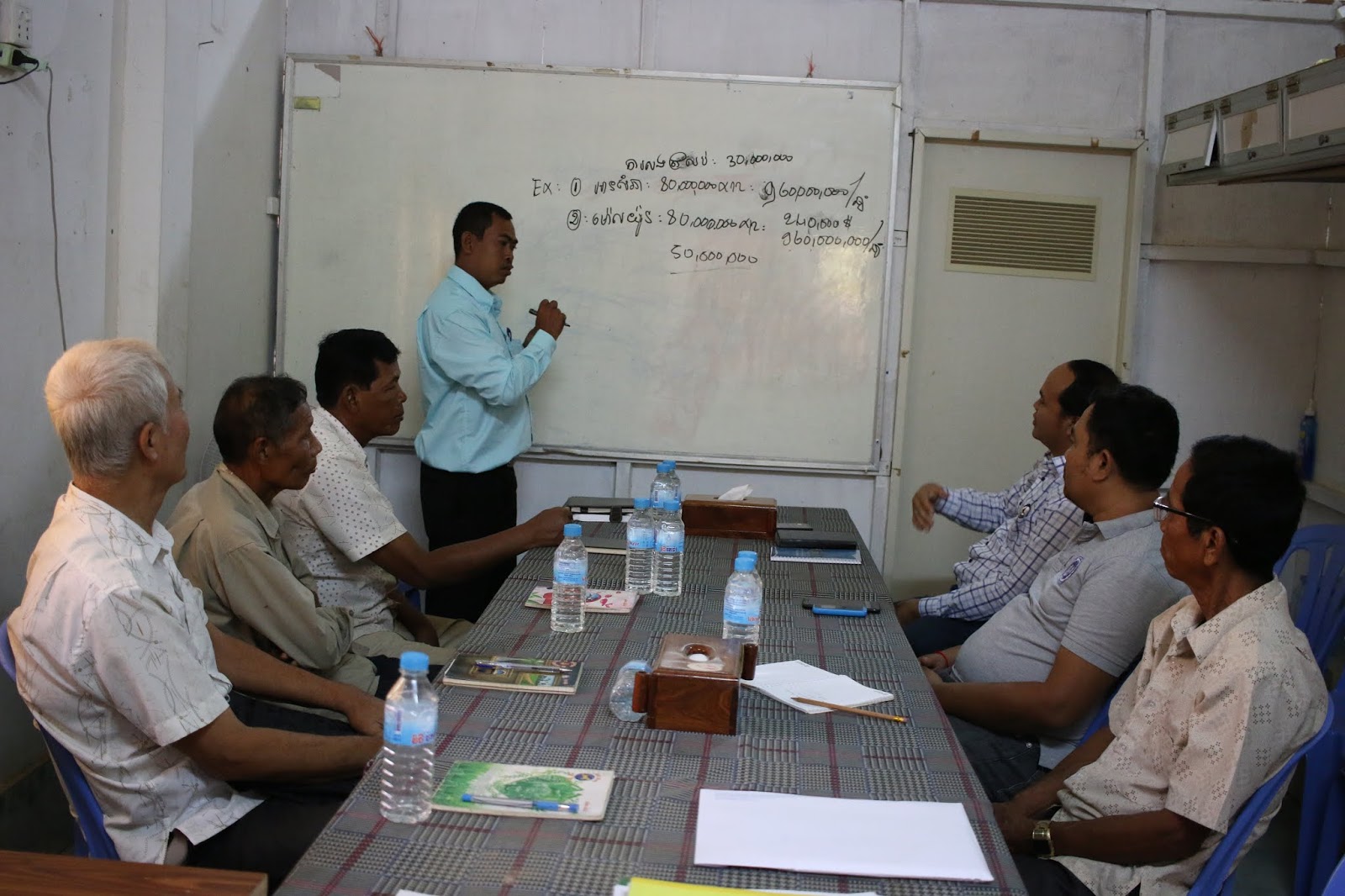
Feed the Future Cambodia Harvest II began working with KAF in Phnom Preuk district, Battambang province, in June 2018, helping the firm build longan farmers’ access to reliable inputs and technical capacity. With support from Harvest II, KAF held trainings for producers, buyers, input dealers, and farm service providers, covering such topics as pruning, the proper application of fertilizers and pesticides, and the use of personal protective equipment.

With facilitation from Harvest II, KAF also began working more closely with input dealers. Phut Borey, one such dealer, started out as a longan farmer before opening an agro-inputs depot last year. He also operates a pesticide-spraying service for farm owners, and, after connecting with KAF at a training, took an interest in their products.“I prefer using legal products from my own country,” Borey says, “because the company guarantees the quality. The guarantee is important, because farmers invest a lot in their farms.”

Input dealer Phut Borey has worked with Khmer Angkor Farmer to expand farmers’ access to legal, quality agro-inputs, as well as the technical expertise that they need to apply them safely and properly.


Borey encourages his farmers to attend KAF’s trainings, and has built his own capacity to provide quality services and technical assistance to his customers. His clientele has grown from ten to 100 farmers, and he has hired a permanent employee to help with both his own farm and his support services business.

Many of Borey’s farmers sell their longan to the Pailin Longan Association, an agricultural cooperative that purchases Cambodian longan for export to Thai markets. Harvest II has worked with the association to build their network of suppliers in Phnom Preuk, increasing their access to longan of adequate and consistent quality.
“Especially important,” says Yim Bunthoeun, a Pailin Longan Association buyer, “is technical capacity,” because of the strict requirements for export markets. “If a farmer harvests 30 tons, but they have not cared for their farm well, only ten tons will meet the standards.”
Input supply company Khmer Angkor Farmer has helped build the technical capacity of farm services labor groups to provide improved services to longan farm owners. 


The Pailin Longan Association works symbiotically with input dealers like Borey, who help farmers improve the quality of their harvest and connect them to the association’s buyers. In return, the association provides an attractive market for farmers’ longan, thus encouraging them to expand their production and in turn increasing demand for agro-inputs. In the last season, the association purchased $1.89 million of longan from 52 farmers in Phnom Preuk and neighboring districts, a tenfold increase on the previous season. Meanwhile, KAF has seen its profits increase, and is building a strong reputation as a reliable company providing quality agro-inputs and technical assistance.

“We do whatever it takes to ensure that farmers see Khmer Angkor Farmer and know that it is good quality,” says Narith. “They use our products and achieve success, and so they speak highly of us.”

June 18, 2019

Cashews for the Community

How One Woman Entrepreneur Is Bringing New Opportunities to Her Community

In Laihuot, of Trapeang Arak village in Kampong Thom province, first began working as a cashew collector five years ago. She entered a sector characterized by a lack of coordination among market actors and a heavy dependence on Vietnamese traders: with limited value-added infrastructure at home, Cambodia exports most of its cashews to Vietnam for processing.

Laihuot, 40, who is also a cashew and rice farmer, saw these challenges as an opportunity – not only for herself, but for others in her community as well. Thus, after initially working through a farmers’ association and community processing center in her village, Laihuot decided to start her own business as a collector and processor.

At first, she says, a key challenge was working with farmers to ensure a supply of cashews of consistent quality and quantity, as well as managing her business and navigating the market. Furthermore, a lack of working capital limited her purchasing capacity during the harvesting season.

Ms. Laihuot has worked with Harvest II to expand her network of suppliers and support farmers in her community to improve their harvests, strengthening her own business in the process.
©Feed the Future Cambodia Harvest II/Benjamin Rost, 2019

Then, at the outset of the cashew season last year, Laihuot attended a short training hosted by Feed the Future Cambodia Harvest II on cashew pest and disease management. After applying the techniques that she learned at the training, Laihuot saw improvements in her harvest, and recognized an opportunity to support her fellow farmers and to strengthen her business at the same time.

Laihuot worked with Harvest II to grow her network of suppliers, expanding from a single village to three districts, and to improve her supply chain management. She began collecting information from her producers related to their production capacity and expected yield, and now pays premium prices for premium product in order to encourage farmers to improve their harvests and post-harvest handling.

“In previous years, farmers would always bring product with some unripe cashews, some overripe, some still attached to the fruit, some covered in dirt,” Laihuot says. “But this year, they wash and clean their cashews, and if I cannot go collect them right away, they have started drying them, too.”

Laihuot is also helping her producers to improve their yields. After joining a business-to-business workshop organized by Harvest II last year, Laihuot connected with VT Grow Co., a specialized input supply company, and joined a technical training in her district on the proper application of inputs for pest and disease management. She subsequently shared what she learned with her farmers to help build their capacity – and her business as well.

Providing sustainable employment opportunities to women in her community is a central element of Ms. Laihuot’s mission as a business owner. Seventy percent of her staff are women.
©Feed the Future Cambodia Harvest II/Benjamin Rost, 2019

As a result of her efforts and improved collaboration with her farmers, Laihuot was able to collect a total of 57 tons of cashew last year. This season, after securing a loan with help from Harvest II to increase her access to working capital, she is on track to buy and sell twice as much and has plans to build a storage facility to stockpile cashews for year-round processing.

But it’s not just for her own benefit that she works so hard. Her processing business is oriented towards providing employment to others in her community – especially women, who make up 70 percent of her staff, and who, Laihuot says, are uniquely impacted by limited employment opportunities in their communities. “I run this business through an aspiration to help the community – I don’t want to profit just only for myself; I want farmers to profit just as I do,” Laihuot says.

By partnering with entrepreneurs like Laihuot, Harvest II is helping Cambodians capture value-added opportunities for local horticultural products as well as bring new jobs to rural areas.


x

Bringing Local Produce to Modern Retail

A Vegetable Wholesaler in Siem Reap Expands into New Markets

Two decades ago, when he was still a young boy, Rim Krai used to travel with his father to sell vegetables in Siem Reap town. Now a vegetable wholesaler in Prasat Bakong district, Siem Reap province, Krai recalls how they would load up their ox cart with cabbages, making the fifteen-kilometer journey along a rough dirt road to the market – and that they would always sell out.

These days, things have changed for vegetable wholesalers like Krai. Cambodian-grown vegetables must compete with imports from neighboring countries, while supply networks are often inconsistent in terms of quality, quantity, and timing, as farmers lack technical expertise and access to market information.

Thus, when Krai heard that Makro, an international supermarket chain, was opening a store in Siem Reap, he recognized an opportunity to improve his business – and support his producers in the process. As one of the first modern retail outlets in Siem Reap, a town with vibrant tourism and hospitality industries, Makro could help provide Krai with a stable market for his vegetables, and bring Cambodian produce to a modern retail outlet. Meeting Makro’s quality standards, however, would take work.

With support from Harvest II, Rim Krai has expanded his network of suppliers, and now purchases between 500 and 1,000 kilograms of vegetables a day – a tenfold increase on previous years.
©Feed the Future Cambodia Harvest II/Benjamin Rost, 2019

Since January 2018, Krai has been working with Feed the Future Cambodia Harvest II to improve his wholesale business. Harvest II connected Krai to more suppliers in his area, helping him expand his daily collection volume and improve his supply chain management.

“Before working with Harvest II,” Krai says, “there weren’t many vegetables to buy. I bought from only two or three households, and producers lacked technical knowledge and post-harvest handling skills.”

After working with Harvest II, he expanded his daily collection volume from between 50 and 150 kilograms to between 500 and 1,000 kilograms, and supported his producers to improve their post-harvest handling techniques.

“Now, they throw out the rotten vegetables,” he says, “and prepare them in ten-kilogram bags. They sort the vegetables by grade as well.”

Confident in his producers’ ability to meet Makro’s demand, Krai was eager to work with the supermarket as a supplier of local vegetables. With facilitation support from Harvest II, he traveled to Phnom Penh to meet with Makro managers and negotiate a contract, and began selling to them in January 2019.

Since then, his income has increased, as Makro provides a reliable supplement to Krai’s wholesale business at Samaki market in Siem Reap. Krai now employs six staff: three to run the wholesale stand at Samaki market and three to organize and package produce according to Makro’s standards.


Krai has supported his producers to improve their post-harvest handling, such as by grading, sorting, and packaging their vegetables after harvesting.
©Feed the Future Cambodia Harvest II/Benjamin Rost, 2019

“I am glad to work with Makro,” Krai says, “as not many buyers like myself are able to enter into this kind of business. Makro orders vegetables every day, and I am glad to have a daily income.”

To prepare for future expansion of his business with Makro, Krai has worked with Harvest II to support his producers to continue improving their production methods, and to begin growing vegetables year-round to ensure a more stable supply network throughout the year. As his business continues to grow, Krai looks forward to the benefits that it will bring: more jobs in his community, more stability and support for farmers, and more customers able to enjoy Cambodian-grown vegetables.

March 26, 2019

AC Supports Improved Production through New Business Venture


How One Agricultural Cooperative Is Expanding Its Business to Support Members


Agricultural cooperatives, or ACs, are common in Cambodia as organizations in which many small farmers work together as a business. Many provide loans or sell agro-inputs to members, or support members to grow and sell their crops. Without business experience and market expertise, however, many ACs find it challenging to operate successfully within Cambodia’s dynamic horticulture market system.

Stoeng Sangkae Agriculture Cooperative is one such AC. Located in Battambang province with roughly 2,500 members, Stoeng Sangkae AC was established in 1998 to provide loans to its members, 80 percent of whom are farmers growing rice, mango, and vegetables, with small business owners comprising the other 20 percent. After officially registering in 2017, the AC wanted to expand its business activities to better support its members, but was unsure of how to begin.

Stoeng Sangkae AC committee members meet to discuss current constraints and future business plans.
©Feed the Future Cambodia Harvest II/2018/Solina Kong

Then, in January 2018, Stoeng Sangkae AC members attended a “Know Your Market” business and marketing skills training hosted by Feed the Future Cambodia Harvest II and partners. Alongside more than 200 horticulture sector actors, including other ACs and agro-input retailers and dealers, Stoeng Sangkae AC members participated in sessions designed to enhance participants’ capacity to market quality agro-inputs and provide technical advice to farmer customers.

Afterwards, the AC decided to begin selling agro-inputs to its members, recognizing room for improvement on its old model. “Previously we bought agro-inputs from nearby input dealers, which is a bit expensive,” said San Sean Ho, the AC committee leader. “Then we would apply those inputs on our farms based on our own experience, which was sometimes ineffective and raised the cost of production.”

With facilitation assistance from Harvest II, the AC connected with two specialized input supply companies. In addition to expanding members’ access to quality inputs, the companies provided technical trainings and on-farm demonstrations on fertilizer and pesticide application, and helped the AC set reasonable input prices for its members.

The AC was still constrained by a lack of capital, however. To help address this constraint, Harvest II facilitated a meeting between the AC committee and a microfinance institution (MFI) to discuss loan opportunities. By establishing collateral and other required documentation, the AC was able to access loans.

By accessing loans from an MFI and connecting with input supply companies, the AC has purchased 20 tons of agro-inputs to supply to its farmer members.
©Feed the Future Cambodia Harvest II/2018/Solina Kong

As a result, Stoeng Sangkae AC has been able to expand its operations to support its members. The AC continues to provide loans to members, and has purchased 20 tons of agro-inputs to sell to producer members, storing surplus in its warehouse. The AC also serves as a mango collector for its farmers, buying 20 tons of mango from its members last year. This year, the AC plans to double its sourcing, selling between 40 and 50 tons of mango to Misota Co., a local mango processing company, through a purchasing agreement facilitated by Harvest II.

By partnering with the MFI, Stoeng Sangkae AC was able to access the capital it needed to expand its business activities, and its agreement with Misota ensures a stable market for its members’ products. “By linking with the input supply companies,” Sean Ho added, “we receive both technical knowledge and reasonable prices, helping us lower the cost of production and increase quality.”

The result is an AC that, by forming mutually beneficial commercial relationships with other market actors, is better equipped to support its members to expand production, improve quality, and increase sales, contributing to a stronger and more robust horticulture market system.


New Horizons for Pursat Oranges


How One Orange Buyer Is Investing in His Supply Chain to Bring More Fruit to Market


Oranges from the province of Pursat are one of Cambodia’s most popular fruits. Prized for their sweet, slightly tart flavor, these unique green oranges are in high demand year-round. During the dry season, however, growers have trouble producing oranges of sufficient quantity and quality, and buyers face difficulties securing an adequate supply.

Khun Sopheap, a collector in Phnom Kravanh district, Pursat province, has partnered with Feed the Future Cambodia Harvest II to address these challenges through improved supply chain management. He began by working with Harvest II to establish and strengthen contract agreements with his growers, arranging to purchase farmers’ entire harvest for an agreed-upon price – 40 percent of which is paid up front – and sharing the costs of inputs with his producers, giving them access to the capital they need to purchase inputs and expand production.

Khun Sopheap has implemented numerous new business practices to improve his supply chain management, helping his producers expand production, increasing his sales.
©Feed the Future Cambodia Harvest II/2018/Solina Kong


To further build Sopheap’s growers’ capacity to produce during the dry season, when the supply of oranges falls by around 70 percent, Harvest II connected Sopheap with two agro-input supply companies to provide his growers with quality fertilizers and pesticides and hold ongoing trainings on their correct use. Harvest II also collaborated with one of the companies to conduct an exposure visit for Sopheap and 10 of his producers to observe drip irrigation systems at successful off-season orchards in other provinces.

“Hearing 1,000 times is not equal to seeing a single time,” said Sopheap, quoting a popular Cambodian proverb. “Drip irrigation is such a good technology to practice on farms. It makes for very convenient fertilizing and watering and saves times and labor, which will help us produce higher quality oranges during the dry season.”

With support from the input supply company, Sopheap decided to pilot drip irrigation on his own farm before showcasing this best practice to his producers and helping them install similar cost-shared irrigation systems on their farms.

An exposure visit, hosted by Harvest II in collaboration with an input supply company, introduced Sopheap and his producers to drip irrigation systems that they can replicate on their own farms.
©Feed the Future Cambodia Harvest II/2018/Solina Kong
“Harvest II is like a bridge to safely bring me across difficult roads,” he said. “I am connected to more actors, which helps me to establish stronger business relationships and increase my sales.”

Sopheap’s success demonstrates the potential of improved supply chain management as a win-win for all market actors. Sopheap increases his sales, while his producers increase production and are thereby able to maintain a stable market for their oranges. The input supply companies expand their business by establishing new loyal customer bases and creating larger markets for their goods and services.

Furthermore, as Sopheap and his various market partners continue to increase their sales and create new jobs, they generate ripples within the horticulture sector, helping establish new business relationship norms. By partnering with entrepreneurs like Sopheap, Harvest II is working towards a more robust market system and a stronger Cambodian economy – and year-round access for Cambodian consumers to delicious Pursat oranges.


December 11, 2018

Empowering Youth in Cambodia’s Horticulture Sector


Young Cambodians see greater opportunities for sustainable livelihoods

Cambodia is one of the “youngest” countries in Southeast Asia. With nearly two thirds of the population under the age of 30, youth play an increasingly vital role in driving Cambodia’s economic and social development.

Feed the Future Cambodia Harvest II works to accelerate growth in Cambodia’s horticulture sector. Over the past year, Harvest II partnered with over 400 horticulture buyers and producers – 12 percent of whom are youth – as part of Harvest II’s efforts to catalyze progress towards a stronger and more robust market system.

Mr. Pok Pich, 24, is one such young entrepreneur. Based in Siem Reap province, Pich started out managing his parents’ 20-hectare cashew farms. When he had trouble finding reliable buyers, however, he decided to create his own business collecting cashews from other growers, in addition to growing his own. At first, Pich had trouble sourcing cashews of adequate quality and quantity for export markets. “The main challenge,” he said, “is increasing cashew yield and quality, as harvests are affected by climate change causing pest and disease outbreaks.”

Pich prunes trees on his cashew farm to improve the quality and quantity of his cashews.
©Feed the Future Cambodia Harvest II/2018/Solina Kong

Then, Harvest II worked with Pich to expand his supply network, introducing him to new producers and helping him negotiate buying conditions. Harvest II partnered with Angkor Green Co., an agro-input company, to provide technical trainings and follow-up visits for Pich’s producers, helping them improve their cashews’ quality and quantity.  “Since we received trainings and on-farm demonstration from Harvest II,” Pich said, “and applied the techniques on our farms, we noticed significant improvements, especially concerning the trees’ health and roots.”

As a result, Pich was able to collect 1,000 metric tons of raw and dried cashew last year, and is currently working with Harvest II to connect his suppliers to specialized input companies for additional technical guidance and quality inputs. Harvest II is also helping Pich connect to new buyers who can offer better prices.

Three hundred kilometers away in Battambang Province, Mr. Meas Pheaktra, 28, is also eager to expand his business. Pheaktra began growing mango and longan six years ago, but his technical capacity was lacking. With help from Harvest II, Pheaktra connected with a specialized input company, who provided him with technical knowledge and on-farm demonstrations on pruning, fertilizing, hormone treatment, and other practices to improve mango quality. Harvest II also connected Pheaktra to several buyers, including a processing company and an exporter, to ensure a secure market for his fruits.
After working with Harvest II, Pheaktra began implementing improved growing practices in his orchards, increasing his yield by two thirds.
©Feed the Future Cambodia Harvest II/2018/Solina Kong

“I planted mango six years ago, but I didn’t use proper techniques,” he said. “Now, I feel confident, as I am connected to a trusted input company and several buyers who offer me a competitive price.”

By working with youth in the horticulture sector, Harvest II is building the capacity of young Cambodians like Pich and Pheaktra to take part in and drive progress towards a stronger Cambodian economy.

August 31, 2018

Promoting Public-Private Dialogue in Cambodia’s Horticulture Sub-Sector


Good communication between the government and the private sector is essential to building an enabling environment that can support growth. However, interaction between stakeholders is not always regular or fruitful. To address this problem in the Cambodian horticulture sector, public-private dialogue (PPD) meetings were organized by Feed the Future Cambodia Harvest II in four provinces: Pursat, Battambang, Siem Reap, and Kampong Thom. Participants at the PPDs included buyers, suppliers, agro-input supply companies, financial institutions, provincial chambers of commerce, as well as provincial line departments. During the dialogues, these actors discuss constraints and challenges and propose solutions through focus group exercises.
Mr. Chhim Vachira, Director of PDAFF in Battambang commented that “I am happy to see diverse relevant stakeholders help address constraints and identify areas for collaboration as it is rare to have everyone sitting together like this.” A longan exporter, Mr. Kong Sokha also expressed that “This is a good opportunity to meet and talk about our challenges and propose solutions that benefit all.”
Focus group discussion between microfinance institutions in the horticulture in Battambang.
©Feed the Future Cambodia Harvest II/2018/Solina Kong


Numerous findings were raised during each group discussion. For instance, a priority concern raised by agro-input companies was the unfair competition brought about by unregistered and illegal imported agro-inputs and the complex registration and license process. Horticulture producers expressed that they lack production knowledge and technologies, have inadequate capital and market information, and that agro-inputs are expensive – all chronic issues preventing them from being competitive.

In addition, inconsistent supply due to seasonal production, low quality produce, high competition with imports, lack of investment in processing, lack of working capital, and financial skills seemed to be major issues among buyers. The latter, especially, has led to an increase of payback risk to microfinance institutions and banks. Similar issues were also brought up by provincial line departments and development partners.
Focus group discussion between NGOs and development partners on the challenges faced by horticulture actors in Siem Reap.
©Feed the Future Cambodia Harvest II/2018/Solina Kong

Harvest II will synthesize and share these findings in a national public-private dialogue to be held later this fiscal year, where government ministries, development partners, and key private sector actors will be engaged. Additionally, this PPD will document the issues, constraints, and challenges, and formulate potential joint solutions to address enabling environment constraints in the sub-sector.


Strengthening Resilience to Climate Change


In Cambodia, agriculture plays a vital role to ensure food security and contribute to economic growth. Over 80 percent of the population of Cambodia lives in rural areas and about 70 percent depends on agriculture for their livelihoods. However, farmers in Cambodia are facing major production constraints from unreliable rains, drought, changes in weather patterns, and pest and disease outbreaks caused by climate change, affecting their economic and livelihoods.

To help farmers with this challenge, Feed the Future Cambodia Harvest II ("Harvest II") awarded two grants to local NGOs - Aphivat Strey (AS) and International Institute of Rural Reconstruction (IIRR) - to work directly with 2,000 producers in Battambang, Pursat, and Siem Reap, three of the four Feed the Future’s Zone of Influence.
Producer Phon Hok (right) is packaging cucumber into 10 Kg plastic bags ready for buyers to transport to the market.
©Feed the Future Cambodia Harvest II/2018/Solina Kong
This climate change adaptation and resilience activity under the Feed the Future Cambodia Harvest II project is intended to improve access to and use of climate information, resulting in risk-reducing actions in the targeted intervention areas. The main activities under these grants is to identify successful technologies or practices, then provide training and follow-up coaching to sure that producers and producer groups are applying climate smart practices on-farm. The trainings include bed raising, trellising, drip irrigation and mulching, healthy seedlings, and composting. This training is helping farmers produce more efficiently, which improves their ability to increase production quality and quantity to meet buyer demand. As of June 2018, 14 climate resilience practices were introduced to 1,184 vegetable producers (59% women; 11.5% are youth) through direct trainings and follow-up visits. As a result, 64% of them have applied multiple climate resilience practices.  

Producer Sophal collects long beans to sell at a local market in Battambang.
©Feed the Future Cambodia Harvest II/2018/Solina Kong
For example, vegetable producer Phon Hok is one of the farmers who received trainings and has applied and improved his production capacities significantly. Hok said, “I used to read agriculture books and asked [for advice] from neighbors but now I have benefited from an expert coming to my farm.” Similarly to Hok, vegetable producer Sophal said that her vegetable production is much better in term of quality and quantity, helping her to increase her income and support her family.

Harvest II also launched a series of one-hour radio talk shows on climate resilience practices that was broadcast over a six-month period through one of the most popular local radio stations. Speakers from private sector such as input supply companies, NGOs, and model farmers, were invited to share their experience with farmers calling in to ask for more information on their production challenges. Over this period, 12 talk shows on climate resilience were broadcast and shared over social media like Facebook, reaching over fifteen thousand people across the country.


August 30, 2018

Increasing Buyers’ Capacity to Respond to Market Demand


Cambodia’s juicy and sweet mango is in high demand for the export market. Although Cambodia has many varieties of mango, Keo Romeat mangoes (pictured at left) are the most popular on the international market.

Vuth Chanthou is a mango buyer in Battambang province, part of the Feed the Future’s Zone of Influence. Chanthou exports grade one mango to the Thai market, sending the rest to a wholesale market in Battambang. Chanthou has been working as a mango buyer for five years, developing a positive relationship with ten producers, exporting around 1,000 tons on- and off-season mango per year. Chanthou wanted to buy more, but she was having problems finding new producers.

Vuth Chanthou, a mango buyer in Battambang stands in front of her car and truck, preparing to collect mango from her producers. 
©Feed the Future Cambodia Harvest II/2018/Solina Kong
Feed the Future Cambodia Harvest II is a project designed to help horticulture actors connect and work more closely together. Harvest II has connected Chanthou to an additional 21 producers and collectors, doubling her mango sourcing by increasing farm-level sales of $582,901 between December 2017 and June 2018.

Harvest II has also connected input supply companies to Chanthou’s producers to provide advice about fertilizer, pruning, pests and disease control. This helps improve fruit tree health and increase yield and quality. The companies also provided in-depth technical demonstrations at mango farms that brought together producers and Chanthou to observe the new techniques.

Sok Nat is one of the new producers who just harvested mango for Chanthou for the very first time. He had negotiated with various buyers before, but their offers were low and they wanted to buy only the best quality mango instead of the entire crop. Harvest II brought Chanthou to visit Nat’s farm and facilitated the negotiation. Through Harvest II’s facilitation, Chanthou agreed to purchase Nat’s entire mango harvest and provided a cash advance to ensure the purchase agreement. Nat supplied all his mango (55 tons) to Chanthou and is willing to work with her again for the next mango season.

Harvest II has also linked Chanthou to another new producer, Cheav Chhoun, who was looking for a buyer. Chhoun also received training from input supply companies, helping him better understand how to take care of his mango trees. He said, “Many buyers come to negotiate with me, but only Chanthou offers me a good price.”

Producer Cheav Chhoun collects mango for buyer Vuth Chanthou.
©Feed the Future Cambodia Harvest II/2018/Solina Kong

Chanthou said, “I am happy that Harvest II connected me to more producers so I can increase my export capacities.” Chanthou is planning to expand to the Vietnamese market next year and expects to increase her sales to $1 million per year. Harvest II will continue to help Chanthou work more effectively with producers while also helping her scout new export opportunities.


June 22, 2018

Helping Horticulture Sector Buyers Access Finance


In Siem Reap province, the 37 members of the Banteay Srey Safe Agricultural Cooperative grow primarily cashew nut and mango on 200 hectares of land. Mr. An Som Ol, the agricultural cooperative (AC) committee leader, says one of the group’s main constraints to increasing its sales is working capital investment. “I want to borrow ten thousand dollars to collect cashew from our members and other producers, as well as expand our production to other crops, but I don’t know how,” he said.

Lack of finance has limited Cambodia’s horticulture sector actors—especially buyers of horticulture products—from expanding their businesses and increasing their sales. Many actors don’t know how to access appropriate services. For those that do know, they may still need a facilitator to help them identify the best financial products or prepare loan applications.

Harvest II staff met with Banteay Srey Safe Agricultural Cooperative committee members to discuss their constraints.
©Feed the Future Cambodia Harvest II/2018/Solina Kong

Feed the Future Cambodia Harvest II (“Harvest II”) is helping horticulture sector actors address financing constraints and seek lending options from financial institutions. Harvest II linked Banteay Srey Safe Agricultural Cooperative with Idemitsu Saison Microfinance, a Japanese micro-finance institution that provides financing for Cambodia’s agricultural sector. In discussions facilitated by Harvest II, Idemitsu Saison Microfinance agreed to disburse a $12,000 loan with a lower interest rate (1.3% per month, compared to 1.5% normally) and with no collateral requirement. As part of this facilitation, Harvest II conducted a short training for Banteay Srey Safe Agricultural Cooperative on how to prepare required documents, like financial statements, to apply for this and future loans.

“I could not have received this loan without Harvest II’s support,” Mr. Som Ol continued. This is the first time this AC has received a loan, and it will help them expand their business to buy more produce from internal and external members, as well as expand their crop production. With these additional resources, the committee has started discussing a production schedule that aligns to the needs of their customers in the wholesale market. They have started to plant mixed fruits and vegetables such as watermelon, chili, cucumber, and other leafy vegetable so that they can harvest – and earn money - year round.

Harvest II aims to accelerate growth of Cambodia’ commercial horticulture in Pursat, Battambang, Siem Reap, and Kampong Thom provinces. The project currently works with buyers and producers in the horticulture sector to establish or strengthen relationships, increase sales, boost investment, and create more jobs in the sector.

June 13, 2018

Helping Buyers and Producers Work Together


Cambodia is now a lower-middle income country, with a growing demand for fruits and vegetables. Many farmers could work their way out of poverty if they could increase sales, yet many buyers find it easier to source their produce from neighboring countries. USAID’s Feed the Future Cambodia Harvest II project (“Harvest II”) is working with buyers to make it easier to do business with local producers.

Chanthan and Nam are vegetable wholesalers working with Harvest II. Nam collects about one and half tons of mixed vegetables every day, including cucumber, eggplant, pumpkin and chili from 25 farmers in his local community and send them by bus to his wife, Chanthan, working at a market in Phnom Penh, 200 kilometers away. Together, they earn barely enough to make a living, but they know they could sell even more vegetables. Nam wants to increase his sales to three tons per day because the demand in high, but it requires a lot of works with producers. He says “Farmers do not always have a regular supply. We have the market, but lack the produce.”

vegetable producer Chun Sokhom
©Feed the Future Cambodia Harvest II/2018/Solina Kong

Under its buyer-led approach, Harvest II helps with buyers of all sizes, including Nam and Chanthan, increase sales by entering into a win-win relationship with local producers, based on a clear understanding of buyer demands. Harvest II first helped Nam and Chantham diagnose constraints to increased sales among their existing farmers and identify new farmers to work with. Then, they all met to devise solutions to increase sales in the immediate term and envision how they could grow their businesses over the longer term.

To date, Harvest II has connected Chanthan and Nam to ten new farmers. Sokhom is a farmer who can produce 200 kg of cucumber per day. She supplies cucumber to four different buyers including Nam but is willing to supply more to him with a fair price agreement. By adding these new producers, Chanthan and Nam can increase their sales to three tons per day. However, supply is not stable due to a lack of technical know-how at the farmer level.

Vegetable buyer Lach Nam collects eggplants from farmer Chun Sokhom to supply to the wholesale market in Phnom Penh.
©Feed the Future Cambodia Harvest II/2018/Solina Kong

Harvest II will help improve the production capacity of Chanthan and Nam’s farmer clients by arranging a production schedule that aligns to the needs of their customers in the wholesale market while providing targeted capacity building on technical production and business management, as well as access to finance.