January 12, 2021

Safe and organic products foster healthy living

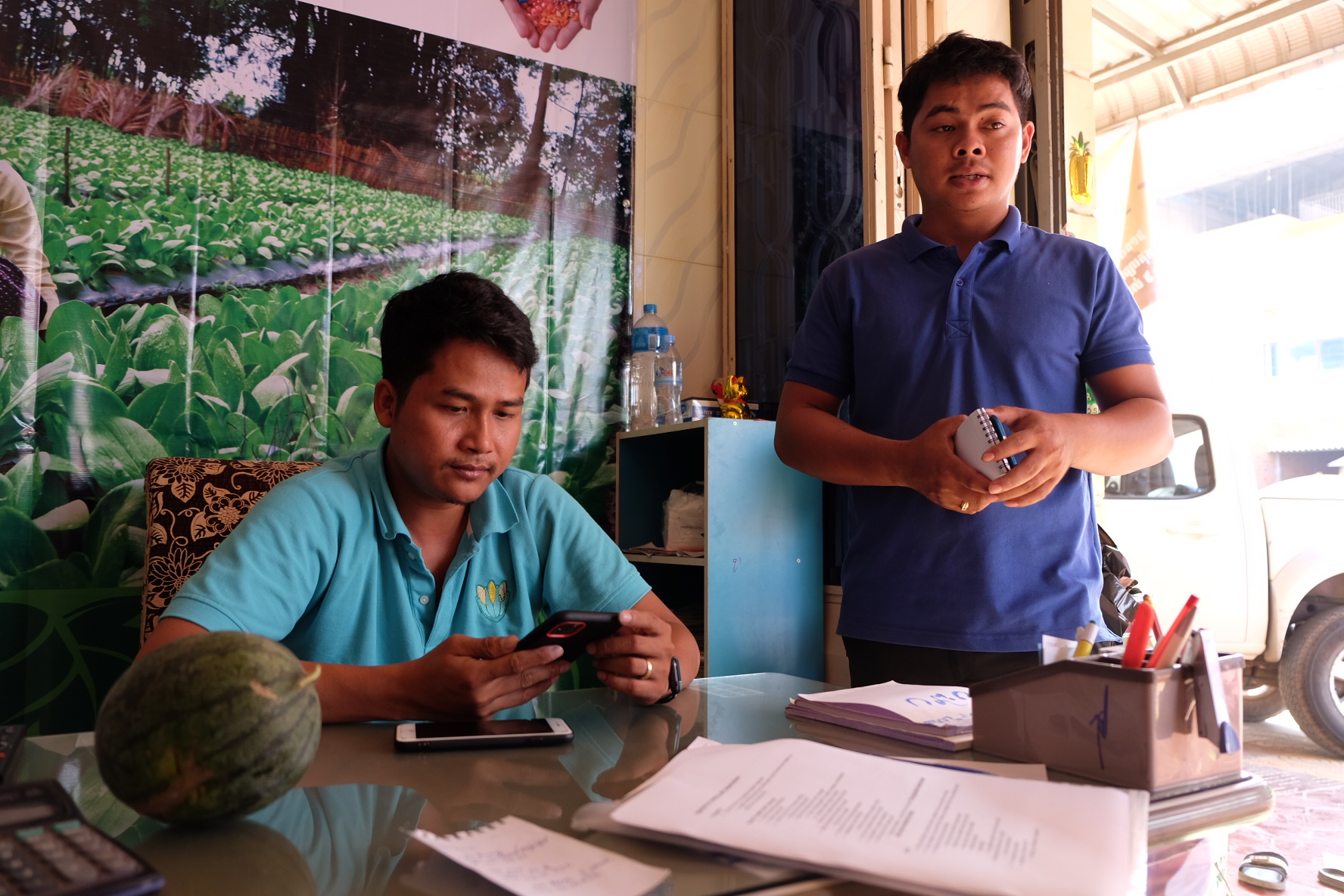
The rising demand for safe and organic horticultural products in Cambodia is creating an array of opportunities for businesses, producers, consumers, and other market actors. Laey Baitong is the first agribusiness enterprise that provides local, fresh, safe, and organic agricultural products in Battambang province. Feed the Future Cambodia Harvest II has been working with this enterprise since January 2020, connecting them with multiple actors including producers, input dealers, and other public and private sector partners, utilizing several avenues to provide consumers with access to safe, local products. 

Harvest II connected Laey Baitong with several input supply firms such as Healing Nature and Husk Ventures to procure organic fertilizer; it also connected them with seed dealer Song Mouy to obtain quality seeds for farmers. In addition to sourcing quality inputs, Harvest II worked with Song Mouy to host an exposure visit to Thailand. This notable occasion provided an opportunity for not just Laey Baitong but also producers and other buyers to learn various methods to improve practices and innovative production approaches, thus returning to Cambodia with increased knowledge and beneficial alternative practices to share and build the technical capacity of producers.

Laey Baitong joins an exposure visit to Thailand to learn improved organic production practices. 

Mr. Tityarith, a committee member of Laey Baitong, shared, “the exposure visit provided an opportunity for us to gain a deeper understanding from an expert about organic production and the value of forming producer groups.”

To promote awareness and educate consumers on the benefits of safe and organic products, Harvest II facilitated Laey Baitong’s participation in the Accelerating Inclusive Markets for Smallholders (AIMS) project’s weekly Farmers Market venture, led by the Ministry of Commerce, which began in June 2020.  Harvest II introduced and supported Laey Baitong’s participation and booth set-up to display safe, local vegetables at the pilot market. Additionally, Harvest II assisted Laey Baitong in attending several trade fairs organized by other government ministries to promote their business and products.

Laey Baitong displays their products during AIMS’s weekly Farmers Market to promote safe and organic products.

Mr. Chhay Lo, the chairman of Laey Baitong mentioned, “During the first day at the AIMS market, we earned around $25, but as we continued displaying every weekend, people became aware and bought more. Now we earn about $50 a day – double the amount on the first day.” These trade fairs not only provide an opportunity for Laey Baitong to promote their products but also serve to raise awareness of the benefits of local over imported products.

Additionally, Laey Baitong also caters to customers by providing a home delivery option. As demand for home delivery has increased over the past year, Laey Baitong plans to expand this service, expanding its reach across Battambang and other provinces.

By working closely with key actors and stakeholders in the market system, Laey Baitong has demonstrated the value of promoting safe and local products to end consumers and has succeeded in expanding their business faster than expected.


September 1, 2020

Adopting New Net House Technology

Tasei AC’s Net House Exercise Yields a Rewarding Business Enterprise 

Cambodia’s horticulture sector faces a set of complex challenges, from extreme temperatures and water stress to pest and disease management. Farmers are impacted by drought and flooding, plant damage from high temperatures and pest outbreaks, and though these difficulties constrain agricultural output, Feed the Future Cambodia Harvest II and its farmers see opportunities to pursue and test alternate production techniques.

Net housing is an innovative approach to farming, which creates a natural barrier between crops and a sometimes harsh environment: providing shade, reducing heat, controlling plant development, and preventing insect access. This farming method promotes increased yields with minimal pesticide use and provides protection from extreme weather, facilitating off-season production. 

As Tasei Samaki Agriculture Cooperative (Tasei AC) experienced production constraints, members undertook a unique plan of action, opting to experiment with net housing food production. In September 2019, Tasei AC began with 7 net houses, and after recognizing the benefits of this novel technique first-hand, have expanded production to include 30 net houses, each approximately 10 m. x 30 m.

Harvest II collaborated with an input dealer Song Mouy to invite an expert from Thailand to introduce and advise Tasei AC members about crops appropriate for net houses, as well as production techniques.

In addition to net housing, seed selection and proper fertilizer use can help further improve yields. Feed the Future Cambodia Harvest II connected Tasei AC to Song Mouy, a reputable input dealer in Battambang to help him choose the right seeds. Song Muoy in collaboration with Harvest II invited an expert from Thailand to further advise Tasei AC on successful net housing crops, raising seedlings, land preparation and other production techniques.  In addition, Harvest II connected Tasei AC to grantee Husk Ventures to use husk biochar which helps regenerate the soil and grow healthier crops. These connections led to increased yields and quality, as well as expanded markets.

Throughout construction of the net housing, some of Tasei AC’s members observed and learned the construction process from the professional builder. Applying this knowledge, they began offering construction of net housing at a more economical price than a professional builder. They officially launched their new enterprise in May 2020, providing building services to AC members and other farmers.

Tasei AC has built 30 net houses so far and aims to complete construction of 100 net houses by the end of this year.  Mr. Muy Veasna, a 21-year old AC member shared, “Last year, the AC had only 9 net houses and I got just one but now we have 30 net houses and most members including myself have 3 net houses.”

Mr. Muy Veasna is using husk biochar to improve his production in this net house.

Harvest II worked closely with Tasei AC to conduct a cost-benefit analysis to encourage the adoption of safe vegetable cultivation under net house production by other producers. Initial findings suggest that if farmers invest about $2,500 in a net house, they can recoup the investment after five to six crop cycles. The production technique provides the opportunity for year-round production, ensuring consistent supply and reduced pesticide usage and improving food safety for consumers and boosting product diversification.

Experiencing the benefits of net housing, Tasei AC, in collaboration with Harvest II, promotes alternatives to continue developing the local vegetable production system and showcase the technology to other farmers. Through adopting innovative solutions and working together, the horticulture sector in Cambodia creates more opportunities for producers, buyers and consumers alike.

A New Joint Venture in Fruit Processing

Links between farmers, a wholesaler, processor, and international buyer yield an opportunity for growth

Cambodia’s Pursat oranges are gaining recognition as the sweet and flavorful fruit gains favor in international markets. The oranges are marked by their unique green skin when ripe and have sweet, yellow center.

Khun Sopheap, an orange collector and producer in Pursat province, partnered with the Feed the Future Cambodia Harvest II project some years ago to address challenges faced during the dry season. He worked closely with Harvest II to establish and strengthen contract agreements with his producers and connected with an agro-input firm to custom-design a water management system for his farm. After installing the system, the daily watering during the dry season created a continuous orange harvest, providing a more stable year-round supply.

Harvest II has been working with Pursat-based orange buyer Mr. Khun Sopheap to improve production by connecting with input firms and conducting exposure visits, formalizing agreements with producers, as well as connecting to a fruit processor Misota. 


Knowing the value of the year-round supply, Harvest II connected Sopheap to a local fruit processor in Battambang, Misota Food Import Export Co. Ltd. After Misota conducted a site visit to Mr. Sopheap’s farm, they ordered 500 kg of fresh oranges to perform product trials. The two parties worked together testing product quality, reliability of the supply chain, the quality of processed samples, all to ensure the viability of the partnership.  After finding success processing the product, Misota began ordering
10 tons of fresh oranges to process into dried oranges to conduct market surveys. Misota has displayed and evaluated the product at exhibitions, trade fairs and other events and observed a strong public interest.

Showcasing their new products at exhibitions, trade fairs and other events provides Misota the opportunity to gain insights into customer preferences.

Recognizing the success of the collaboration, Misota and Mr. Sopheap agreed to a joint-venture investment, budgeting 150,000 USD (50% each) as cash advances to ten orange producers in Pursat province. The activities will help Mr. Sopheap scale up supply, providing working capital to producers.  The agreement secures needed quantity and quality of supply for Misota and creates value added for a local product. 

“I am very excited to join the partnership with Misota, and I am proud that I can fulfill my dream. I dreamed Cambodian oranges would be able to be processed into value-added products like dried orange and orange juice for the local and international market. This adds another chapter to the story of Cambodian oranges.” shared Mr. Sopheap.

A meeting among key mango market actors facilitated by Harvest II, and supported by Kirirom Food Production’s business network, created the opportunity for Harvest II to match Misota to Japan Farm Products (Cambodia) Co. Ltd., a Japanese company looking to export dried fruit to Japanese markets. The company conducted a site visit to Misota’s factory to observe processing and factory standards, subsequently providing technical staff to train the Misota team, share processing techniques and teach factory management in order to meet Japan’s high-quality standards. 

Following the training, Japan Farm Products imported 15 tons of Japanese mandarin to Misota’s factory, and after processing, the product was packaged and exported back to Japan. Japan Farm Products plans to export other dried fruit from Misota, including orange, pineapple and mango. This exercise proved to be successful and provides Misota avenues to expand its current core activity of fruit processing, as well as adding benefits to producers like Mr. Sopheap.

The linking together of key actors and building on that relationship strengthened the supply chain, addressed product quality, fostered trust and provided a joint investment opportunity to accelerate growth and development across the national horticulture sector and expansion to international markets.


June 4, 2020

Improving supply chain management through collaboration

Longan actors in Battambang connect and learn improved production practices

Longan, the tasty, high-value tropical fruit, offers enticing export market opportunities for Cambodians in the Battambang region near the Thai border. At the same time, actors in this sector – the longan agricultural cooperatives (ACs), buyers, collectors, producers, and other service providers – have faced challenges meeting market requirements. Recently, however, the group has begun working together to improve product quality and increase yield, and their efforts are paying off.

Feed the Future Cambodia Harvest II (Harvest II) has provided a variety of support to the subsector using its market systems approach. Since production issues were a binding constraint, Harvest II worked with government officials to deliver Cambodian Good Agricultural Practices (Cam-GAP) training to 222 participants in Battambang. In addition to introducing improved product quality and production practices, the training encourages producers to conduct food safety risk assessments, adopt sound environmental practices, and safeguard workers’ health.

GDA and PDAFF delivers Cam-GAP training to participants in Battambang.

Suon Keo Mony, a longan collector who attended the training, doubled his sourcing of longan from more than 100 farmers. This collector has invested financially to provide Cam-GAP training to his farmers utilizing the arrangements coordinated by Harvest II’s partnership with PDAFF. He shared, “The training is very useful because when farmers understand and apply Cam-GAP, they can increase their quality and productivity, and I can also increase my purchase to export market.”

In addition, Harvest II hosted an exposure visit to Thailand for 11 longan actors including buyers, AC members, and an input supply company. The exposure visit aimed to build capacity for the actors through observation of successful farmers and service providers that have adopted improved practices and services. After the exposure visit, Mr. Hun Vatha, the Ponleu Thmey Pichchenda AC Board of Directors has formed a group of farmers to provide trainings (spraying, pruning, harvesting, etc) and has developed a Facebook page to share gained insight with other farmers. He added, “This is a very good opportunity for me to join the exposure visit as I can share new knowledge to the AC members and non-members through trainings and social media platform like Facebook.”

Mr. Hun Vatha, the Board of Directors of Ponleu Thmey Pichchenda Agricultural Cooperative.

Harvest II further facilitated an agreement between longan collectors and producers, resulting in an expansion of more than $1.7 million in working capital that they have used to offer cash advances to producers to purchase agro-inputs and apply techniques to increase productivity and quality.

Through improved practices and supply chain management among key players in the longan subsector, a new longan processing company has invested $3 million in a longan processing facility in Pailin, near Battambang province. The company will continue purchasing Cam-GAP longan from Harvest II collectors after a bilateral agreement is signed between the Royal Government of Cambodia and China. With the current processing capacity of the newly established facility, longan sales are predicted to double from 2,500 to 5,000 tons per year.

Pilot program taps agronomy grads

A Commercial Horticulture Agent works to enhance agricultural input sales and services

Agricultural input dealers play a major role in the horticulture sector of Cambodia. In addition to managing their day-to-day operations, they must stay up to date with agricultural trends, provide technical support and advice to farmers, understand market needs and prepare for the next season. Due to limited time and many responsibilities, dealers often find it challenging to develop and strategically grow their businesses.

Kimsong, an agricultural input dealer in Battambang, is an example of a dedicated input dealer who saw the need for change. He was committed to providing his customers the best service and support, but that was impeding his business development. Spending most of his time in the field, maintaining relationships and assisting farmers prevented him from taking the necessary steps to expand his business. 

Feed the Future Cambodia Harvest II (Harvest II) worked closely with Kimsong to assess his needs and identify a solution that would benefit both his business and farmers. This led to the creation of a new position called Commercial Horticulture Agent (CHA). A CHA is a recent agronomy graduate who earns a modest salary and commission. In this role, he works closely with retailers, forges relationships with farmers and provides customized support to all parties, allowing dealers to focus on growth and advancement.

Teng Tin, the Commercial Horticulture Agent, at Depot Song Mouy, Kimsong's agricultural input shop. 

Kimsong hired the first CHA, Teng Tin, in October 2019. Tin spends most of his day visiting farms and fostering relationships with retailers and farmers, attending trainings, and sharing the best practices for the Battambang area. In the last three months, he has connected with over 100 farmers and five new retailers that are now regular customers of the dealership. “Retailers are happy to meet because I am not only there to promote products, but also to create a close relationship and discuss their challenges.” Tin reports. “Now that I do their job in promoting their products at the farm, they can also spend more time in the shop and sell new products.”   

This unique role strengthens the sector by facilitating business growth, expanding its knowledge base and providing personalized support to dealers and farmers. “Tin not only provides sales support to me, but also technical information, and now we also exchange ideas,” shares an agricultural input retailer from Battambang. “Tin also goes to many technical training sessions, and if I cannot attend, he shares the information with me the next time I see him.”

An agricultural input dealer, Kimsong (left) shared, "In my mind, Tin is equal to five employees from other companies. He is always happy to do the work and supports me in many ways.Add caption

The CHA has provided Kimsong a way to provide better support and services while addressing his business needs and the needs of the community. Since the addition of the CHA, his first quarter has seen a 5-10% increase in sales and he has been able to open a temperature-controlled store that offers a large selection of seeds and instructional advice. As the industry observes the resounding impact from this new role, other businesses are seeking to include CHAs in their business models. One example is the agricultural cooperative in Battambang, which is planning to hire a CHA to help with sales, administration and communication tasks.

As the horticulture market continues to develop, collaborating with motivated actors to try new strategies that respond to system-level constraints can create mutually beneficial solutions and foster inclusive growth. The CHA program is showing promise as a way to meet the needs of businesses and cooperatives, bring new knowledge to farmers, and help young agronomy graduates find meaningful work in the sector.


February 24, 2020

MFI's App Provides Ag Advice to Farmers


Opportunities in Cambodia’s horticulture sector have grown in recent years, with increased demand in both domestic and international markets for Cambodia-grown products. Meeting quality and quantity requirements, however, is a challenge for many producers, who lack access to the technical information and quality inputs that they need to improve production practices.

AMK, a local microfinance institution, or MFI, recognized the benefits of building producers’ capacity to improve yields. Many of AMK’s clients are farmers, and by supporting them to improve production, AMK anticipated that they would see a decrease in loan default rates – as well as an increase in business, as more small and medium enterprises (SMEs) take out loans to expand their businesses in a growing sector.  

With support from Feed the Future Cambodia Harvest II, AMK developed the TonleSap App to help horticulture sector actors address these constraints. The app is an online platform designed to increase farmers’ access to the technical, market, and product information that they need to improve production outcomes.

Through AMK's TonleSap App, agriculture cooperatives and farmers are able to
access accurate and up-to-date technical, market, and product information.

Launched in January 2019, the TonleSap App has been continuously updated and expanded to meet users’ needs and respond to feedback. With more than 8,000 current users, more than 1,100 of whom are in the horticulture sector, the app offers 92 technical guides, developed by AMK’s team of technical experts and consultants to address common production concerns. AMK has trained more than 4,000 market actors on how to download and use the app, and developed the Tonlesap App Facebook page to reach a wider audience.

Building on the popularity and potential of the TonleSap App for farmers, AMK developed the complementary TonleSap Seller App, designed to provide an adjacent platform to help sellers and service providers advertise their products, receive orders, and manage sales. More than 100 supply chain actors, including input retailers and dealers, service providers, and buyers have registered with the app, helping further facilitate and expedite market linkages and business communication across the supply chain.

The TonleSap Seller App helps input dealers like Kimsong upload and promote
their products and connect with farmers.

“The TonleSap and TonleSap Seller Apps are very important to me and the farmers,” said Kimsong, an input dealer in Battambang. “I can promote my products and farmers can access technical and market information anywhere with their smartphones.”

Going forward, AMK will continue to expand the functionality of the two apps, with plans to integrate delivery and payment services to facilitate transactions between farmers and product and service providers.

Through their commitment to developing and continuously improving an innovative technology to build the capacity of agriculture sector actors, AMK is investing not only in their business, but in the strength of the market system as a whole.


Keeping Farm Workers Healthy


Longan, a fruit similar to lychee, is a popular fruit for export among Cambodian farmers. Longan is notoriously difficult to grow, and using chemical pesticides and fertilizers can help increase yields. However, chemicals pose risks to the environment and to farm workers’ health if not properly applied.

Yim Bunthoeun, a longan exporter in Battambang province near the Thai border, grew concerned about his workers’ health after observing the negative impacts of spraying chemicals without protective materials. He wanted to provide his workers with personal protective equipment (PPE), materials such as protective clothing, hats, gloves, boots, and respiratory masks that protect wearers against health and safety risks. Bunthoeun, however, wasn’t sure where to find these materials.

Yim Bunthoeun, a longan exporter, has introduced personal protective equipment for his farm workers
to help mitigate the negative health effects associated with improper chemical application.

Harvest II decided to help put a sustainable solution in place. To expand the adoption of PPE among longan farm workers, Feed the Future Cambodia Harvest II hired an expert to train input dealers based in longan-growing regions on the importance of PPE, the safe use of chemicals, and how to improve product placement and air circulation in their shops. The training helped input dealers not only improve their shop conditions, but also build their capacity to provide accurate and appropriate advice to customers on safe chemical use, particularly using PPE.

Phut Borey, an input dealer and longan farm owner in Phnom Prek district, recognized the benefits to farmers of improved PPE use and chemical application methods – as well as the benefits to his business of providing PPE at his shop. Borey, a former farm worker himself, knows firsthand the negative health effects of inadequate protection from chemical pesticides and fertilizers, and was eager to grow his understanding of PPE and improve his shop conditions through the training.

“The training is very important,” Borey said. “I understand better which products are legal and safe to use. I’ve also learned to improve product arrangement. I place chemicals in glass cabinets to prevent them from affecting the air that we breathe.” Borey offers a promotion on respiratory masks to encourage farm workers to adopt PPE, and has also improved his own waste management practices, storing chemical waste in a safe place before burying it in the ground, rather than burning it, to minimize environmental impact.

It was through Borey that Bunthoeun, the longan exporter, was able to provide PPE for his workers – and they have already noticed a marked difference.

Vichet, right, and other workers on a longan farm have started using personal protective equipment
when they spray chemicals on the trees.

“I didn’t use any protective materials before,” said Vichet, a chemical sprayer who works for Bunthoeun. “I had headaches, dizziness, and chest pains.” Vichet used to spend his own money on medicines and treatment to address these issues, but after adopting PPE, his health is improving. “My boss bought these protective materials for all the workers,” he said. “I feel safe and secure. I don’t get sick like before.”

Through collaborative efforts to build understanding of chemical risks and the benefits of PPE, these longan actors are working together to ensure a safer work environment and better health for workers and consumers alike.


February 18, 2020

Strengthening Markets through Collaboration across Provinces


Vegetable Actors in Pursat and Battambang Conduct Exposure Visit to Exchange Learnings


In recent years, as incomes in Cambodia have grown, so, too, has demand for high-quality, safely-produced vegetables. A majority of the vegetables consumed in Cambodia are imported from neighboring countries – but an increasing number of Cambodian consumers are willing to pay more for locally-grown Cambodian produce.

Many vegetable farmers in Pursat province, however, face challenges capitalizing on these opportunities. To this end, Harvest II worked with Provincial Department of Agriculture, Forestry and Fisheries (PDAFF) officials in Pursat province to organize a two-day exposure visit for a group of 11 vegetable growers to neighboring Battambang province. There, many farmers practice more modern production methods, and agricultural cooperatives (ACs) work with PDAFF officials support their members to access markets. Pursat PDAFF officials agreed that they, and the farmers they work, would benefit by exchanging learnings with their peers in Battambang.

Through this visit, Battambang PDAFF officials hosted farmers and officials from Pursat to meet with a number of horticulture sector actors in Battambang, including a vegetable-focused AC and an input supply company, to observe improved production methods, learn about improved AC management, and hold discussions around how PDAFF officials can best support farmers.

Battambang PDAFF officials hosted farmers and officials from Pursat to observe improved production methods and hold discussions with market actors in Battambang.  

To further promote vegetable growers’ capacity, Harvest II engaged East-West Seed Co. (EWS), an input supply company, to provide additional trainings and follow-up on-farm coaching for producers. Through this collaboration, farmers received technical support to implement some of the best practices that they had observed from farmers in Battambang, such as improved pest and disease management.

“This visit was very important for our farmers, enabling them to learn from the experience of other farmers in Battambang,” said Chey Channy, a Pursat PDAFF official. “We observed practices such as the use of modern irrigation systems and washing and packaging vegetables, as well as finding markets for farmers’ products.”
Vegetable farmer Lorn Sokha hopes to work with an input supply company to an install sprinkler irrigation system on her farm after observing their use in Battambang. 

Un Leakhena, a vegetable farmer in Kandieng district, agreed. “I saw practices I haven’t seen before,” she said, “especially the sprinkler irrigation system. I think it would be very helpful, and I want to install it on my own farm.” She and her sister Lorn Sokha, who also joined the exposure visit, both want other farmers to join too, so that they can also learn about new technologies and best practices.

Pursat PDAFF officials are currently working with farmers to acquire Cambodia Good Agricultural Practices (CamGAP) certification, which will enable them to label their products and differentiate them from conventionally-grown vegetables. Furthermore, Pursat PDAFF has undertaken a public awareness campaign and event to build local consumers’ understanding of the benefits of eating ‘safe’ vegetables – and connect them with the farmers who grow them.

Going forward, Harvest II will continue to engage input supply companies to support farmers to replicate the improved practices that they observed through the visit, and will work with public and private sector partners to plan similar exchange visits. At the same time, Harvest II will continue to connect farmers to larger and more reliable markets for their produce, such as wholesale markets in the province and modern retail outlets in Phnom Penh – part of Harvest II’s work to support inclusive and sustainable growth in the horticulture sector.


November 26, 2019

It Takes a Village


From Company Sales to Community Capacity, Private Extension Services Prove to Be Worthwhile


Many Cambodian vegetable farmers recognize the value of modern production methods. Implementing them, however, can be difficult without reliable access to quality inputs and the technical knowledge to apply them correctly. East-West Seed Co. (EWS) is an input supply company working to change that and expand their business at the same time. With support from Feed the Future Cambodia Harvest II, EWS has worked across the provinces of Pursat, Battambang, Siem Reap, and Kampong Thom not only to build producers’ technical capacity, but also to strengthen the support systems and services that farmers need to continue improving their yields and access stable markets.

A central element of EWS’s approach is its work with independent retailers. Based in the villages where farmers live and work, retailers provide a crucial link between farmers in need of quality goods and services, and EWS, who can provide them.

Kain Chenda is one such retailer. Three years ago, he opened an input supply shop in Rohal Suong village, fifteen kilometers north of Battambang town. After initially struggling to attract customers and connect with reputable supply companies, Chenda began working with EWS, recognizing an opportunity to set his business apart by providing quality products and sound technical advice.
Input retailer Kain Chenda has collaborated with East-West Seed Co. to support vegetable farmers’ efforts to improve production through access to quality inputs and reliable technical advice.


Chenda and some of his farmer-clients joined trainings held by EWS on improved growing techniques, learning about different seed varieties and cultivation practices. They participated in demonstrations on mulching, irrigation, and other production techniques.
Building his own technical capacity, Chenda says, is good for his business. “I have to have up-to-date technical expertise and knowledge,” he says, “because farmers have me visit their farms. I can attract various farmers to come buy from me, because I provide this service.”
As noted by EWS sales representative Seng Chanthy, working with retailers like Chenda is part of EWS’s emphasis on sustainability. The company ensures that farmers continue to have support networks in their communities, even after EWS-led trainings, by building retailers’ capacity to provide farmers with not just quality inputs, but technical assistance as well.

“We support independent retailers through technical assistance, product knowledge, and linkages to depots,” Chanthy says. “Many farmers now know which market actors they need to work with in order to access specific seed varieties, technical advice, product knowledge, or market information.”

These networks of mutually-beneficial support mean greater income for farmers, more reliable supply chains for buyers, and better business for input retailers. Chhut Man, a vegetable collector in nearby Bak Amrek village, has doubled his daily collection volume through his farmers’ improved capacity. Chenda’s sales doubled between his first and second year, and are on track to grow another 25 percent this year.
Vegetable buyer and farmer Chhut Man has doubled his daily collection volume as his farmers have participated in East-West Seed Co. trainings and improved their production practices. 
“These days, things are much easier, due to my collaboration with EWS,” he says.
EWS’s Chanthy says that the company’s own sales, too, have increased, growing by more than 21 percent across the four provinces. He attributes much of this growth to farmers’ adoption of improved growing methods, thus increasing their demand for – and confidence in – the company’s products. Input retailers, as trusted and knowledgeable community members, are key to this success, and EWS intends to continue building their capacity and skills.


November 21, 2019

Legal, Quality Inputs and Tailored Services Pay Benefits


Longan Actors Work Together for a Stronger Sector


Longan, a fruit similar to lychee, is popular among farmers in western Cambodia, and has high export potential. Meeting international quality standards, however, requires access to reliable agro-inputs and technical assistance, which many Cambodian farmers lack.

“Many farmers work along the border, learning Thai techniques,” explains Rin Narith, Vice Manager of Sales and Marketing at Khmer Angkor Farmer (KAF), a Cambodian input supply company. “This means that they have to use Thai products. Khmer Angkor Farmer saw this and said, perhaps there’s a market there.”

Thai products pose unique challenges for Cambodian farmers. Illegal imports and counterfeit products are difficult to distinguish from genuine products, and when labels are not translated into Khmer (Cambodian), farmers are unaware of safety risks and proper application methods.

Feed the Future Cambodia Harvest II began working with KAF in Phnom Preuk district, Battambang province, in June 2018, helping the firm build longan farmers’ access to reliable inputs and technical capacity. With support from Harvest II, KAF held trainings for producers, buyers, input dealers, and farm service providers, covering such topics as pruning, the proper application of fertilizers and pesticides, and the use of personal protective equipment.

With facilitation from Harvest II, KAF also began working more closely with input dealers. Phut Borey, one such dealer, started out as a longan farmer before opening an agro-inputs depot last year. He also operates a pesticide-spraying service for farm owners, and, after connecting with KAF at a training, took an interest in their products.“I prefer using legal products from my own country,” Borey says, “because the company guarantees the quality. The guarantee is important, because farmers invest a lot in their farms.”

Input dealer Phut Borey has worked with Khmer Angkor Farmer to expand farmers’ access to legal, quality agro-inputs, as well as the technical expertise that they need to apply them safely and properly.


Borey encourages his farmers to attend KAF’s trainings, and has built his own capacity to provide quality services and technical assistance to his customers. His clientele has grown from ten to 100 farmers, and he has hired a permanent employee to help with both his own farm and his support services business.

Many of Borey’s farmers sell their longan to the Pailin Longan Association, an agricultural cooperative that purchases Cambodian longan for export to Thai markets. Harvest II has worked with the association to build their network of suppliers in Phnom Preuk, increasing their access to longan of adequate and consistent quality.
“Especially important,” says Yim Bunthoeun, a Pailin Longan Association buyer, “is technical capacity,” because of the strict requirements for export markets. “If a farmer harvests 30 tons, but they have not cared for their farm well, only ten tons will meet the standards.”
Input supply company Khmer Angkor Farmer has helped build the technical capacity of farm services labor groups to provide improved services to longan farm owners. 


The Pailin Longan Association works symbiotically with input dealers like Borey, who help farmers improve the quality of their harvest and connect them to the association’s buyers. In return, the association provides an attractive market for farmers’ longan, thus encouraging them to expand their production and in turn increasing demand for agro-inputs. In the last season, the association purchased $1.89 million of longan from 52 farmers in Phnom Preuk and neighboring districts, a tenfold increase on the previous season. Meanwhile, KAF has seen its profits increase, and is building a strong reputation as a reliable company providing quality agro-inputs and technical assistance.

“We do whatever it takes to ensure that farmers see Khmer Angkor Farmer and know that it is good quality,” says Narith. “They use our products and achieve success, and so they speak highly of us.”

June 18, 2019

Cashews for the Community

How One Woman Entrepreneur Is Bringing New Opportunities to Her Community

In Laihuot, of Trapeang Arak village in Kampong Thom province, first began working as a cashew collector five years ago. She entered a sector characterized by a lack of coordination among market actors and a heavy dependence on Vietnamese traders: with limited value-added infrastructure at home, Cambodia exports most of its cashews to Vietnam for processing.

Laihuot, 40, who is also a cashew and rice farmer, saw these challenges as an opportunity – not only for herself, but for others in her community as well. Thus, after initially working through a farmers’ association and community processing center in her village, Laihuot decided to start her own business as a collector and processor.

At first, she says, a key challenge was working with farmers to ensure a supply of cashews of consistent quality and quantity, as well as managing her business and navigating the market. Furthermore, a lack of working capital limited her purchasing capacity during the harvesting season.

Ms. Laihuot has worked with Harvest II to expand her network of suppliers and support farmers in her community to improve their harvests, strengthening her own business in the process.
©Feed the Future Cambodia Harvest II/Benjamin Rost, 2019

Then, at the outset of the cashew season last year, Laihuot attended a short training hosted by Feed the Future Cambodia Harvest II on cashew pest and disease management. After applying the techniques that she learned at the training, Laihuot saw improvements in her harvest, and recognized an opportunity to support her fellow farmers and to strengthen her business at the same time.

Laihuot worked with Harvest II to grow her network of suppliers, expanding from a single village to three districts, and to improve her supply chain management. She began collecting information from her producers related to their production capacity and expected yield, and now pays premium prices for premium product in order to encourage farmers to improve their harvests and post-harvest handling.

“In previous years, farmers would always bring product with some unripe cashews, some overripe, some still attached to the fruit, some covered in dirt,” Laihuot says. “But this year, they wash and clean their cashews, and if I cannot go collect them right away, they have started drying them, too.”

Laihuot is also helping her producers to improve their yields. After joining a business-to-business workshop organized by Harvest II last year, Laihuot connected with VT Grow Co., a specialized input supply company, and joined a technical training in her district on the proper application of inputs for pest and disease management. She subsequently shared what she learned with her farmers to help build their capacity – and her business as well.

Providing sustainable employment opportunities to women in her community is a central element of Ms. Laihuot’s mission as a business owner. Seventy percent of her staff are women.
©Feed the Future Cambodia Harvest II/Benjamin Rost, 2019

As a result of her efforts and improved collaboration with her farmers, Laihuot was able to collect a total of 57 tons of cashew last year. This season, after securing a loan with help from Harvest II to increase her access to working capital, she is on track to buy and sell twice as much and has plans to build a storage facility to stockpile cashews for year-round processing.

But it’s not just for her own benefit that she works so hard. Her processing business is oriented towards providing employment to others in her community – especially women, who make up 70 percent of her staff, and who, Laihuot says, are uniquely impacted by limited employment opportunities in their communities. “I run this business through an aspiration to help the community – I don’t want to profit just only for myself; I want farmers to profit just as I do,” Laihuot says.

By partnering with entrepreneurs like Laihuot, Harvest II is helping Cambodians capture value-added opportunities for local horticultural products as well as bring new jobs to rural areas.


x